Showing posts with label movie. Show all posts

Wednesday, 14 December 2016

What does George Lucas Think of Rogue One?


Image result for george lucas movies
It has been recently confirmed that Star Wars creator George Lucas has watched a version of the upcoming Star Wars Anthology film "Rogue One". What does this mean for the film?

Last year "The Force Awakens" shattered the box office by becoming the third highest grossing film of all time according to Box Office Mojo. But even the commercial success cannot overshadow the criticism from fans and critics alike who argued that "The Force Awakens" was an updated version of the original Star Wars. But what does George Lucas himself think about Rogue One?

The original creator of the Star Wars universe apparently liked Rogue One more than Star Wars: The Force Awakens. Director of Rogue One, Gareth Edwards, said in an interview with io9 about his talk with George Lucas

“Two days ago, we got to show George the movie. We all had a phone call, and I got to speak with him yesterday, and I don’t want to put words into his mouth, but I can honestly say that I can die happy now. He really liked the movie, so it meant a lot. To be honest, and no offense to anyone here, it was the most important review to me… and I will take that conversation to the grave. It was a real privilege and his opinion means the world to me.”

Lucas was somewhat critical of The Force Awakens last year, a movie that devided fans and critics. So if Lucas likes it, does that mean Rogue One is even better than Episode VII? We’ll just have to wait a few more days to see.

What do you think this means for Rogue One? Will it be better than The Force Awakens? What Star Wars Anthology film would you like to see? Let me know what you think on Twitter. @TwmBurrows

Friday, 7 October 2016

2017 Oscar Nominee Predictions


Best Picture

Billy Lynn’s Long Halftime Walk
La La Land
Silence
Moonlight
The Birth of a Nation
Manchester by the Sea

Best Leading Actor

Denzel Washington (Fences)
Casey Affleck (Manchester by the Sea)
Ryan Gosling (La La Land)
Tom Hanks (Sully)
Michael Keeton (The Founder)

Best Leading Actress

Viola Davis (Fences)
Emma Stone (La La Land)
Natalie Portman (Jackie)
Annette Bening (20th Century Women)
Ruth Negga (Loving)

Best Director

Ang Lee (Billy Lynn’s Long Halftime Walk)
Martin Scorsese (Silence)
Nate Parker (The Birth of a Nation)
Damien Chazelle (La La Land)
Kenneth Lonergan (Manchester by the Sea)
Clint Eastwood (Sully)

Best Supporting Actor

Liam Neeson (Silence)
Hugh Grant (Florence Foster Jenkins)
Michael Shannon (Nocturnal Animals)
Stephen McKinley Henderson (Fences)
Mahershala Ali (Moonlight)

Best Supporting Actress

Michelle Williams (Manchester by the Sea)
Naomie Harris (Moonlight)
Nicole Kidman (Lion)
Greta Gerwig (20th Century Women)
Margo Martindale (The Hollars)

Best Animated Feature

Moana (Walt Disney Pictures)
Zootopia (Walt Disney Pictures)
Kubo and the Two Strings (Laika)
The Red Turtle (Sony Pictures Classics)
Miss Hokusai (GKIDS)
Best Cinematography

Silence (Rodrigo Prieto)
Billy Lynn’s Long Halftime Walk (John Toll)
La La Land (Linus Sandgren)
Arrival (Bradford Young)
Nocturnal Animals (Seamus McGarvey)

Best Editing

La La Land (Tom Cross)
Billy Lynn’s Long Halftime Walk (Tim Squyre)
Silence (Thelma Schoonmaker)
Fences (Hughes Winborne)
Jackie Sebastián Sepúlveda

Best Original Screenplay

La La Land (Damien Chazelle)
Manchester by the Sea (Kenneth Lonergan)
Moonlight (Barry Jenkins, Tarell McCraney)
Loving (Jeff Nichols)
Jackie (Noah Oppenheim)

Best Adapted Screenplay

Fences (August Wilson)
Silence (Jay Cocks)
Lion (Luke Davies)
Nocturnal Animals (Tom Ford)
Billy Lynn’s Long Halftime Walk (Jean-Christophe Castelli)

Best Original Song

La La Land – Audition (The Fools Who Dream)
La La Land – City of Stars
Moana – We Know the Way
Sing Street – Go Now
Hidden Figures – Victory

Best Original Score

Arrival (Johann Johansson)
Nocturnal Animals (Abel Korzeniowski)
The Jungle Book (John Debney)
Rogue One: A Star Wars Story (Michael Giacchino)
Jackie (Mica Levi)

Best Visual Effects

Billy Lynn’s Long Halftime Walk
The Jungle Book
Arrival
A Monster Calls
Rogue One: A Star Wars Story

Best Costume Design

Fantastic Beasts and Where to Find Them (Colleen Atwood)
Jackie (Madeline Fontaine)
Fences (Sharen Davis)
Silence (Sandy Powell)
La La Land (Mary Zophres)

Best Sound Mixing

La La Land
Billy Lynn’s Long Halftime Walk
Arrival
Passengers
Rogue One: A Star Wars Story

Best Sound Editing

La La Land
Rogue One: A Star Wars Story
Arrival
Passengers
The Jungle Book

Best Art Direction

La La Land (David Wasco)
Silence (Dante Ferretti)
Rules Don’t Apply (Jeannine Oppewall)
Billy Lynn’s Long Halftime Walk (Mark Friedberg)
Fantastic Beasts and Where to Find Them (Stuart Craig)

Best Makeup

Jackie
Nocturnal Animals
Star Trek Beyond
Silence
Fantastic Beasts and Where to Find Them

Best Documentary Feature

Supersonic  (Mat Whitecross)
13th  (Ava DuVernay)
Gleason (Clay Tweel)
The Eagle Huntress (Otto Bell)

Best Foreign Language Feature

The Salesman (Iran)
Toni Erdmann (Germany)
Neruda (Chile)
From Afar (Venezuela)
Elle (France)

Thursday, 6 October 2016

The Deer Hunter - Classic Movie Review

Image result for deer hunter
The Deer Hunter, Cimino's take on the Vietnam movie contrasts the comfort of every day life in America to the flip side as a Prisoner of War in Vietnam. The near three-hour narrative tracing the classic human parabola from wedding bliss to funeral blues, and the ultimate test of friendship.

We open in the hellish heat and sulphurous fumes of the Pennsylvania steel mills, where friends and co-workers Michael (Robert De Niro), Nick (Christopher Walken), Stan (John Cazale), Steven (John Savage) and Axel (Chuck Aspergen) endure inhuman conditions for pay, night after night.

These are tough men, we are told. The weekly reward for the steelworkers is escape into the cool mountains, and Michael in particular is soon scampering across snow-capped peaks with a gazelle's grace. But, lest we forget that a ticket to heaven comes at a prix fixè, Michael tracks and kills a beautiful stag, as if nature itself must pay his tithe.

It's a film of striking and often startling contrasts, and Cimino doesn't once flinch from an unpromising gear change. Indeed, The Deer Hunter is distinguished by quite audacious transitions from high to low, light to dark.

At one point, Michael, abandoned in his motel room at night, suddenly appears at the other side of the frame, still shrouded in darkness; only when he steps forward into the light do we realise that it is now daytime and he is outside, standing in the shade, hiding from his friends.

And, famously, there is the sudden jolt into Vietnam. The hunting buddies, exhausted and exhilarated from a successful trip, come to rest around a piano played by George Dzunda's lovable bar owner; dimly, the rhythm of what sound like rotor blades underscore the pretty melody. Without warning we are in another world, helicopters rain napalm down on a green forest.

If, as Dante maintained, hell is composed of seven levels, we have just slipped down several stages at once.

At a time when patience was a given rather than a virtue, '70s audiences were happy to endure the inevitable longueurs - a 40-minute wedding production number that fails to forward the plot - because word-of-mouth had assured them that all hell would soon break loose.

And for cinema goers who had yet to be fed money shots and special effects, the notorious Russian Roulette sequence - where Prisoners of War Michael, Nick and Steven must face off against each other for the amusement of their Viet-Cong captors - which takes place early in the second hour, was the equivalent of a must-see, water-cooler moment.

Simply one of the most terrifying scenes in celluloid history, this sequence alone ensured that The Deer Hunter would become perhaps the most unlikely blockbuster of all time. When the film went on to dominate the 1978 Oscars - taking five awards including Best Film and Best Director - Cimino was heralded as the poster-child for the brave new world of American cinema. A man, it was supposed, who could do no wrong.

On his return from Vietnam, Michael's failure to reconnect with friends whom he once openly patronized is lent a genuinely tragic dimension. There is no way Michael could explain what he has seen, what he has lived through, even if he wanted to.

And in a movie that is practically spoilt for stand-out performances, Meryl Streep's luminous debut, John Cazale's last screen appearance, Christopher Walken's Oscar-winning breakthrough, De Niro is always central, manfully shouldering the film just as Michael carries the crippled Steven to safety. His work with Scorsese is more expansive, more celebrated, but Michael is De Niro's signature performance: the enigmatic, stoic, thoroughly Nietzschean hero who has not only appeared in various forms (see Heat's Neil McCauley) throughout his career, but one that we mere mortals can easily imagine is a close relation of the great man himself.

The Deer Hunter is a grueling film, an upsetting experience, as much an endurance test for the audience as it was for cast and crew fighting a private war on location in Thailand. And yet, from the justly ubiquitous theme music to Vilmos Zsigmondís rich and lyrical cinematography, The Deer Hunter is a film of enormous, if mostly melancholy, beauty.

As such, it contains a raw power to move, and in some cases, bait, audiences to extremes of emotion almost unparalleled in cinema. At the time this was an astonishingly ambitious attempt to dress a wound in the American psyche that was still fresh and weeping; 25 years on,The Deer Hunter deserves to be reclaimed as one of the most powerful humanist tracts ever committed to celluloid.

A simultaneously touching and harrowing experience that puts the audience directly in the shoes of one man's experience of Vietnam.

Monday, 29 August 2016

Kubo and the Two Strings - Movie Review

Image result for kubo and the two strings
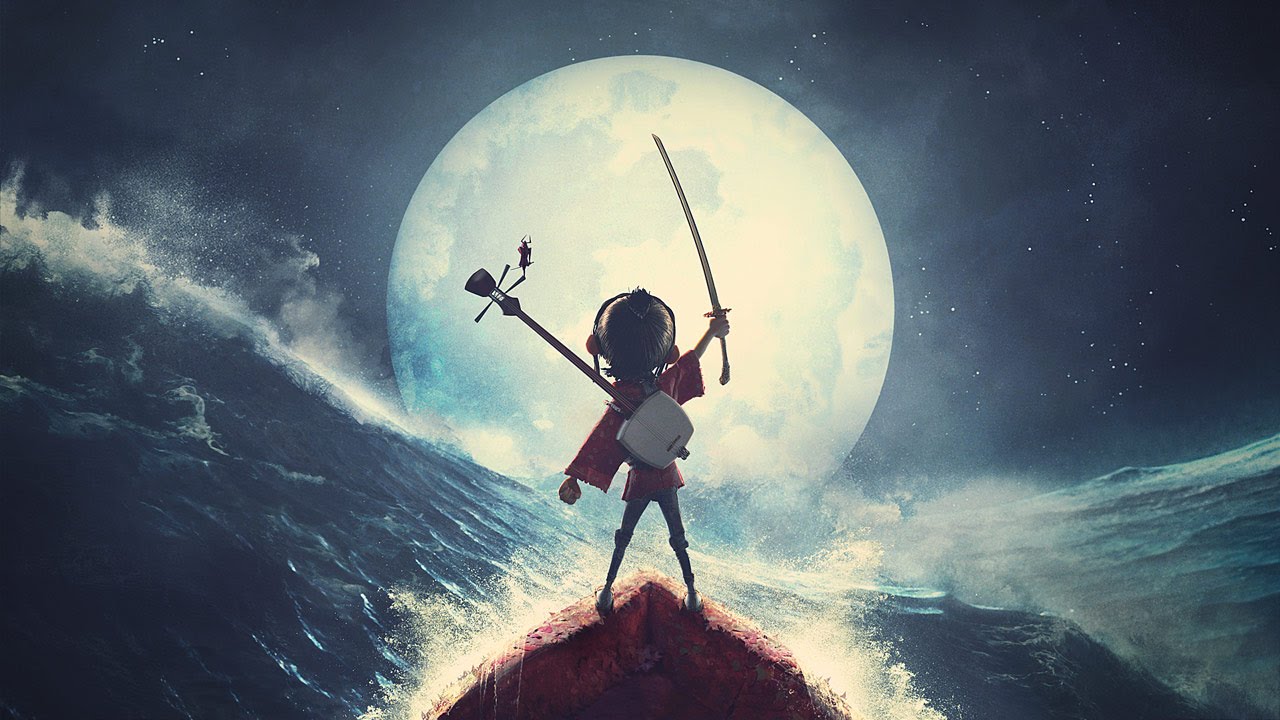
Kubo and the Two Strings begins with a thrilling, immaculately animated prologue, a tale of legendary heroism that sets a precise tone for the storytelling-obsessed film to follow. Once, a woman steered her boat through a troubled ocean, struggling to protect her newborn child at all costs. With only her magic and her shamisen (a Japanese stringed instrument), she manages to find her way to shore, cutting through the roiling waters like a certain prophet before her. But in Kubo’s world, magic and divinity alike are more complex than they seem. And survival isn’t necessarily a happy ending. Not when your child has lost one of his eyes to the forces of evil, at such a young age.

Laika, the visionary hybrid animators behind Coraline, Paranorman, and The Boxtrolls, have managed to craft a film that expands on the virtues of their predecessors, while also dipping a toe or two into more familiar, accessibly riveting territory. The film manages to capture the latter film’s gentle, innovative whimsy, Coraline’s kid-friendly perspectives on danger and consequence, and the emotional resonance that made Paranorman a treat. And it’s all in service of a story that generates consistent laughs and excitement while also exploring deeper questions about the value of living in a world fueled by greed, tyranny, and fear. Like the studio’s previous films, Kubo dares to dream that entertainment aimed at a younger audience can hold the depth and intelligence of any other substantial piece of filmmaking.

And if the film feels just a little more traditional than the boundary-pushing, family-friendly genre filmmaking Laika has explored in the past, Kubo is still rife with riches for viewers of any age. The titular hero (Art Parkinson, in a voice performance mercifully free of treacle) is restless but loyal, going into a nearby village in the daytime to deliver riveting performances of legends his mother passed down to him, and tending to her after the sun goes down. She’s catatonic much of the time, and even when enlivened, she struggles to retain the stories she so desperately wants to share with her son. Integral to Kubo from its early scenes is the power of storytelling as an innately human concept; through stories, we empower the young, articulate the tragedies of the world, and even uphold the spirits of those who have already left us. This includes Kubo’s father, a great warrior who died some years ago attempting to protect his family.

Kubo has some of the same magic in him as his mother does, and he uses it to rivet the villagers with retellings of his father’s war exploits and other stories, using ornately conjured origami creatures that he builds with magic. (The film’s use of formed and collapsed sheets of paper throughout is stunning by itself, to say nothing of the ways in which it uses this visual device.) The tale usually begins the same: “If you must blink, do it now.” It’s the way in which Mark Haimes and Chris Butler’s screenplay opens the film, and it’s as solid a testament as any to the value of keeping your eyes peeled throughout Kubo and the Two Strings.

The film is a visual feast from that tense opening to its sublime, heartfelt, golden-lit final shot, and in virtually every frame in between. Kubo’s yen for showmanship is one shared by director Travis Knight and the Laika team, but to its credit, Kubo roots its many breathtaking visuals in a simple but almost always effective story of love and adventure. When Kubo stays out past dark by accident one day, having attempted to communicate with his dead father during a local ritual paying tribute to the spirits of the dead, he draws the attention of his mother’s sisters (Rooney Mara, voicing both with an eerily icy lack of affect). They are witches in the truest sense, beings of powerful magic who want Kubo’s other eye at all costs, for unknown reasons. And when his mother purges the last of her magic to grant Kubo the chance to escape, he embarks on a quest to unify the disparate pieces of a legendary suit of armor which would allow him to defeat the sisters, and their nefarious father, the Moon King (Ralph Fiennes).

As tends to happen on quests, Kubo eventually finds himself running into a cast of wild characters, and if some of these moments make Kubo and the Two Strings come off a little more like a standard kid’s adventure story at times than its lyrical early moments initially suggest, they’re executed with a rare and striking kind of elegance. A wooden idol that Kubo held for years becomes Monkey (Charlize Theron), a sentient and dryly sarcastic ape tasked with helping Kubo find the three different pieces of armor. Along the way, they also happen upon Beetle (Matthew McConaughey, scattered and witty), a onetime compatriot of Kubo’s father who’s been cursed to forget all his memories of his life before, and also inhabit the multi-limbed body of a giant beetle, but with a human face.

While this review may already have touched on the many visual splendors the film offers, their power cannot be overemphasized. From the dusky fuschias and burning reds of Kubo’s campfire stories, to the blistering expanses of snowy white tundra, to the navy blues and blacks of a dilapidated fortress, Kubo and the Two Strings makes effective use of every imaginable color on the spectrum, and then some. A nightmarish battle involving a gigantic skeleton with a head full of swords is backed by vibrant notes of emerald green that make the skeleton’s hideous form protrude from the image. An underwater “garden of eyes” is full of hideously bulbous creations, black stalks topped by hideous oculi with a nauseous yellow where the whites might normally be. There isn’t a single sequence inKubo that fails to leave some sort of impression with its vivid imagery, and Laika’s trademark fusion of CGI and stop-motion animation gives the film’s many action scenes a tactile, physical quality that leaves the film several cuts above the vast majority of its peers.

Where so many modern animated films use their inflated budgets to pop the eyes and cover for a general lack of cohesive storytelling, Kubo understands the value of simplicity. Now, the film does have a tendency to overstate itself, particularly in its later minutes; its story is so classical in its notions of heroism and an open heart that the film’s eventual shift from a subtler, more understated kind of storytelling to that of a traditional hero’s journey feels extraneous after a point. And yet, a simple story told well can still be effective if the emotional resonance underneath it comes through. In Kubo, it absolutely does, thanks to the uniformly excellent voice performances. Theron is a particular standout, her Monkey transcending the kiddie-movie trappings of the character to offer an effective, wrenching mixture of deadpan humor and tentative warmth. (The animation deserves equal acknowledgment, Monkey’s features turning wistful or enraged or sad with impeccable accuracy and authenticity.)
Image result for kubo and the two strings
If Kubo does eventually hammer home its moral lessons, they come at the end of a film that speaks truth to the inevitability of letting go, and the power of gratitude for the riches that life does allow from time to time. When we age, and prepare to leave the world, what we leave behind is our truest legacy, and in a cultural period fraught with a general sense of exhausted nihilism, here is a film that believes in humankind’s capability to learn from its prior sins, to be better than it once was. To remember the tragedies of its past, so that they are never repeated. The film’s closing moments reject the cloying ease of the “happy ending” in favor of something more philosophical, honest, and emotionally rich, and it’s a superior piece of storytelling for it. In its way, Kubo and the Two Strings is at once a family film for any time, and one very specifically for this one. Sometimes, it’s easy to forget the story, because it hurts to remember or because we just choose to forget. In stories, we find eternal life.
Image result for kubo and the two strings

Tuesday, 21 June 2016

Independence: Day Resurgence - Movie Review

You remember the first alien invasion, back in ‘96? The White House got the explodo. Will Smith was chairman of Earth’s welcoming committee. We killed the alien mothership with an apple computer. It was a simpler time where we didn't need one of the Hemsworth brothers to save the world time and time again.

Cue 2016 (and Independence Day: Resurgence). Set 20 years after the first Independence Day, humanity has come together, co-opted the alien tech salvaged from the first invading force, and done everything possible to prepare in case the aliens ever came back. It’s easy to see those two decades between the movies actually happening.

It might not be something you’d expect from the sequel to Independence Day, but there’s a sophistication to the world building, and it’s a tragedy how little time the movie has to explore it. The post-war golden age feels fresh and clever, but we only get the barest taste before things start exploding. And the explosions come early and often.

Director Roland Emmerich--who was hemmed in by ‘90s special effects when he made the first Independence Day--is back at his annihilative best. It feels like the director behind the wanton destruction in Godzilla, The Day After Tomorrow, and 2012 finally has the means to kick things up to an interplanetary scale. If you go see Resurgence on a big screen, this is what you’re paying for.

There’s hardly a reprieve for the remainder of the two-hour running time. It all looks great, but it’s hard not to get a little fatigued before the big finish. There’s also little room for escalation after the initial, impressive reveals, so the ending felt much flatter than it should have.

The majority of the 1996 cast returns for Resurgence, but 20 years and a Law & Order spinoff later, Bill Pullman and Jeff Goldblum aren’t exactly the blockbuster box office draws they once were.

That said, Jeff Goldblum gets to step out from Will Smith’s shadow in this one, even if his whole role seems to be tricking you into enjoying confusing exposition. He steps back into character somehow entirely po-faced and in on the joke.

The problem is that after a throwaway explanation for Will Smith’s notable absence, Resurgencelargely hands over the reins to new cast members fronted by Jessie T. Usher (playing the son of Smith’s character) and Liam Hemsworth (not Thor, the other one).

Usher and Hemsworth’s characters spend the early parts of the movie competing over who has the bigger chip on his shoulder and the later parts shooting their way from one plot point to the next. And then still more characters get thrown at the screen. Between cameos and a horde of new faces,Resurgence spends so long jumping between its unwieldy cast you never really get the chance to connect with anyone.

Everyone gets a character moment or two, but the front-and-center newcomers don’t seem comfortable enough to indulge in the cheesy blockbusterness of it all, and the movie suffers for it. Goldblum, Brett Spiner, and Judd Hirsch manage to make hay with their screen time and inject enough enthusiasm to keep everything from flatlining, but their all-too-rare comedic beats are at odds with the overly dour younger cast.

Emmerich is known for making a certain kind of movie. Resurgence is exactly what you expect from him, down to the predictable story beats, laughably earnest dialogue, fundamental misunderstanding of science and plot holes deep enough to reach the Earth’s gooey delicious center.

The first Independence Day was all those things too. Except back in 1996, it was at the forefront of the modern wave of sci-fi revival. It made it easy to not only ignore, but revel in the B-movie blockbuster spectacle of it all.

Go watch aliens get blown up, go laugh at the parts that are intentionally funny, go laugh at the parts that are unintentionally funny.

Like Jurassic World before it, Resurgence is a throwback that feels like a slightly off-key greatest hits. Credit where it’s due, it works overtime to outstrip the effects-driven extravaganza of the first, but it feels like it loses the point along the way.

It’s paying dutiful homage without embracing what made the original fun, and the result is that 20 years from now Resurgence won’t have its own Will Smith forming Earth’s one-man welcoming party, or the day being saved with rousing patriotism, or that one precision beam destroying the White House.

Friday, 22 April 2016

The Missing Hand - Movie Review - Indie Film


The Missing Hand is the rare movie that succeeds on almost every level, where each character, scene, music, and joke firing on all cylinders to make a film worth watching over and over again. An excellent script written by Daniel Harding really drags the viewer into every scene and makes you question what you would do yourself if you was in the position of the characters.

In terms of the visual elements of the film, there really isn't much that needs to be said but perfection. A few of the shots have a very distinctive symmetrical style. The use of framing and focus really improves the overall viewing experience of the film and gives it a very professional aesthetic.

The first thing that really gripped me was the original score that was composed and orchastrated by Jack Blume, it really captures the mood and essense of the film. The music is full of suspense and mystery. It's a sound that even Ennio Moricone would be proud of.

Excellent performances from all the cast that really suits the dark comedy narrative. For me the most stand out performance was from Meryl Griffiths who really seemed comfortable in the role she was playing which lead for a very natural and overall great performance.

The directing from Daniel Harding is excellent, it really makes for a smooth flowing film from start to finish because your eye is always looking at something.

Overall I am incredibly impressed with The Missing Hand and it definitely exceeded my expectations by a couple of miles. I'm looking forward to seeing what the future holds for 231/2 Productions.

Wednesday, 23 March 2016

Taxi Driver - Movie Review - Classic Film of the Week

A compelling and unsettling film exploring many of the fears, aches, and dislocations of contemporary urban life.

Travis Bickle (Robert de Niro) is a lonely, frustrated, and disoriented young Vietnam veteran from the Midwest who is working as a night cabbie in Manhattan. He despises "Sin City" with all its pimps and prostitutes, pushers and perverts. As a taxi driver, he stays somewhat sealed off from this ugly external world. He exists in the private space of his room and his cab — two isolated realms serving as a womb. Travis is the anonymous man. The other people to whom he should normally relate in his development as a person have become constant irritants and challenges to his self-will. By the middle of the film, his womb has been transformed into a fantasy chamber giving him the only opportunity he has to assert himself as the center of the universe.

Director Martin Scorsese who did such a masterful job using New York City as a backdrop for Mean Streets again succeeds in capturing the frantic and frightening side of the metropolis. Whether the scene is set in the slummy East Village, as the Bellmore Cafeteria (a hangout for hack drivers) or at Columbus Circle, the picture is a continuing presentation of an oppressive urban soulscape — the ever unfriendly environment.

Travis prowls the city in his cab. The wretched tenements, the glare of traffic lights at night, the eerie vapors emanating from the streets — all combine to create a feeling for Manhattan as an evil octopus. We begin to feel claustrophobic — closed in and pressed upon. The atmosphere of the film is feverish with constant intimations of impending violence.

Travis is hungry for love and recognition. He aggressively inserts himself into the life of Susan (Cybill Shepherd), an attractive, bright, and socially conscious woman who is working at the campaign headquarters of Presidential candidate Charles Palatine (Leonard Harris). Their encounters at her office, over coffee in a restaurant, and on one date are both bizarre and extremely revealing. The relationship is doomed from the start. Seeing her as "an angel in this filthy mess," Travis puts Susan on a pedestal. When he discovers that she is something less than an angel, his despair deepens.

If he can no longer be an adoring prince, Travis wants to be a savior. He showers his affections upon Iris (Jodie Foster), a twelve-year-old hooker who is the property of Sport (Harvey Keitel), a self-obsessed pimp. The taxi driver offers Iris some money in hopes that she will leave the city and the degradation of her life as a prostitute. She laughingly tells him: "I don't know who's weirder — you or me." But we know.

One of the movie's more poignant scenes takes place one night at the Bellmore Cafeteria. Travis tries to convey to Wizard (Peter Boyle), a veteran cabbie, what he feels about the meaninglessness of his life. He struggles to into words his depression, anger, and bewilderment. Although Wizard is somewhat tuned into that same feeling, he can offer nothing except the suggestion of cheap thrills. This vignette works on a gut level; it puts before us in a very realistic way the many situations in our lives when we have played either the role of victim or adviser. And when the scene is over, we feel the sense of loss in both the failure to communicate and the botched opportunity to help a despondent friend.

Robert De Niro's performance as the nervous and psychopathic Travis is a tightrope act of sustained intensity. It is to the actor's credit that he can involve us so deeply with this person's disequilibrium and rage. De Niro doesn't allow us to distance or disassociate ourselves from this character. He places us in the cab and by the sheer insistence of his performance takes us along for the whole ride This is acting worthy of an Academy Award.

Although Taxi Driver contains an assassination attempt on a Presidential candidate, the movie is not about that subject. By taking us inside a killer's mind, it reveals a very important truth: most murders are little murders. What shocks is the ease with which basic human aches can add up to murder — the working out of private grudges thought political symbols (Travis tries to get back at Susan through Palatine) and the sudden anger which finds release against whoever is at hand (the stomach-turning carnage of the film's finale). Taxi Driver is not for those who are unable to handle cinematic violence.

Monday, 21 March 2016

Batman V Superman - Movie Review


A dark force has been unleashed in a new cinematic universe—an enemy of levity, a besieger of vulnerable psyches, a merciless wielder of advance technologies against which ordinary humans sit defenseless. And Zack Snyder is only the director of “Batman v Superman: Dawn of Justice.” The other two guys are really downers.

This underdeveloped, overlong and stupendously dispiriting duel of unlikely antagonists is the first in a projected series of interconnected films based on DC Comics characters. Ben Affleck plays Bruce Wayne/Batman—he’s impressive, within the script’s limits, even though Christian Bale’s Caped Crusader in the Christopher Nolan trilogy was a formidable act to follow. The Clark Kent/Superman role is reprised by Henry Cavill, who is just as inexpressive as he was almost three years ago in the superviolent, ultraturgid “Man of Steel,” which was also directed by Mr. Snyder. The ending of that film and the beginning of the new one overlap. Gotham is again under attack from the cosmically evil General Zod, and Superman, in fighting him, causes vast collateral damage—to the city, and to Bruce Wayne’s enterprises and employees.

That provides the pretext for the conflict between two mythical figures. For Bruce, “Batman v Superman” becomes a tale of revenge. For Mr. Snyder and his writers, Chris Terrio and David S. Goyer, it’s a would-be dissertation on the nature of heroism—“The Incredibles” without the fun—and on two deeply flawed superheroes. Would-be as opposed to what is, because spasms of highfalutin philosophy, and howlingly pretentious dream sequences, serve only as the thinnest of veneers for incessant action in one of the most assaultive movies ever made. (I saw it on a big IMAX screen—there are not-so-big IMAX screens these days—that upped the assaults into virtual felonies.)

In the philosophical scheme of things, Superman is seen as a good guy in a time of terror—a suicide bombing links the movie’s sci-fi fantasy to current reality—but also a loose cannon, a unilateral interventionist and, when public opinion turns against him, an illegal immigrant. (Who knew that extraplanetary visitors needed green cards?) Batman, by contrast, turns into a brutal vigilante who brands his victims with a bat sign. (He’s an aging vigilante, as we’re meant to see when he takes on younger adversaries in a labored ballet of martial arts set in Africa.)

Yet the contrasts are blurred by the movie’s penchant for equal-opportunity pessimism—“We’re all criminals,” says Batman; “No one stays good in this world,” says Superman. (These are indeed dark times, but so was the Great Depression, and Hollywood in the 1930s gave us Ginger Rogers and Fred Astaire along with violent mobsters.) And the conflict between them, far from seeming inevitable, feels exactly like what it is, an arbitrary notion for a big-budget extravaganza that contains trailers—disguised as disjointed action sequences—for sequels to come. Among the characters who surface is Diana Prince/Wonder Woman, played unwonderfully by the Israeli actress Gal Gadot.

The action gets blurry too, not from a deficit of energy—Mr. Snyder, a merchant of bleakness, is also a maestro of high-tech kinetics—but from a lack of variety. After a while everything looks the same, thanks in large part to the ugly blue-and-teal palette the filmmaker favors (the cinematographer was Larry Fong), and everything sounds the same, thanks entirely to a pitiless score, by Hans Zimmer and Junkie XL, that suggests platoons of percussionists high on magic mushrooms. The climactic battle between you-know-who is a slugfest, as inelegant as it is extended. Amy Adams is back as Lois Lane, though she doesn’t have much to do. Jesse Eisenberg has lots to do as the villainous Lex Luthor. This time Lex is conceived as a demented version of the Internet icon Mark Zuckerberg, whom Mr. Eisenberg played in “The Social Network,” but the dementia is more embarrassing than funny. (Oh, for the days of Gene Hackman’s exuberant evil.)

Honor bound as I am to avoid spoilers, I can tell you without fear of divulging too much that there’s a product placement toward the end for Turkish Airlines—an odd if not unseemly aberration in a production that supposedly cost a quarter billion dollars—and that a crucial, and preposterous, plot point turns on mother love.

Wednesday, 16 March 2016

High Rise - Movie Review

If you enjoy shots of dogs leaping to safety from flaming near-doom in disaster movies, steel your eyes. It’s no spoiler to say the mutt sizzles in this adaptation of J.G. Ballard’s 1975 novel from Kill List/Sightseers director Ben Wheatley. As a paw is spit-roasted, the point is well made: faced with extreme material for his first adaptation, biggest budget and biggest cast (not his only hapless hound, mind – RIP, Sightseers’ Poppy), Wheatley doesn’t flinch.

Wheatley and screenwriter/wife Amy Jump’s Ballard riff is unrulier than Crash, David Cronenberg’s take on Ballard’s other supposedly ‘unfilmable’ novel, also produced by Jeremy Thomas. But Wheatley and Jump pull off a similarly seamless author/filmmaker hybrid, honouring the novel while making it their own highly cinematic beast.

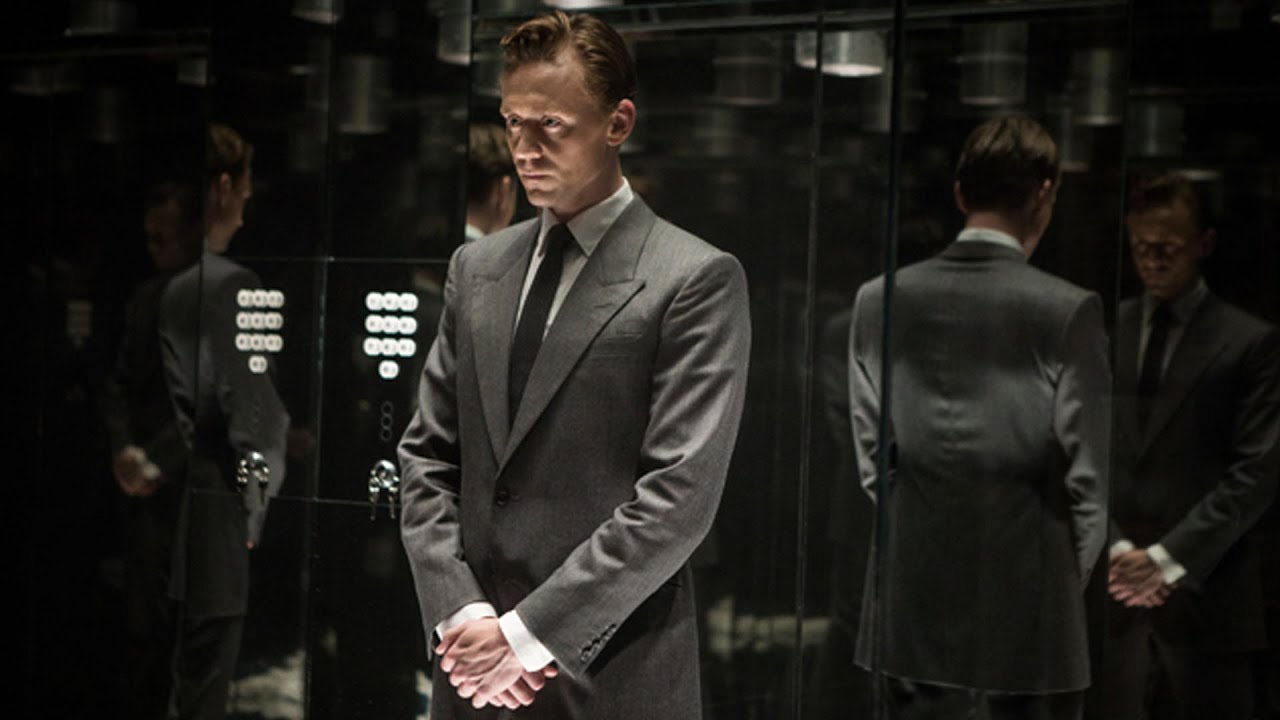
The result drew mixed festival reviews, but roll with its anarchic satirical punch and you’ve got rare meat: a Brit-film of singular vision, blackened wit and dog-toasting audacity, cooked with such brio that its flaws seem like acceptable casualties. As the dog cooks, we meet Tom Hiddleston’s Dr Robert Laing, a seemingly vacant neurologist reclining on a Brutalist tower-block balcony in mid-’70s London.

As placid as he seems, one of many clear mergers of the Ballard/Wheatley/Jump mindsets is established as the voiceover comments, “Now that so many residents were out of the way…” Hell is often other people in Wheatley/Jump’s films, from the singing Christians in Kill List to the fellow holidaymakers up for the chop in Sightseers. Here, the resentment is largely class-based, a point emphasised as we rewind three months and Dr Laing moves into the isolated tower’s 25th floor.

With his charm, looks, slippery personality and copious medicinal know-how as pass-keys, Laing floats between classes and floors. Just above him is Sienna Miller’s free spirit Charlotte Melville; down below, there’s arch-revolutionary documentary-maker Wilder (Luke Evans) and his class-strapped clan, pregnant wife Helen (Elisabeth Moss) and watchful son Toby (Louis Suc). Way up on top is the architect Anthony Royal (Jeremy Irons), who designed the tower as a “crucible for change”, a kind of “experiment”.

If Irons’ roles in Dead Ringers and M. Butterfly provide a roundabout link to Cronenberg, so does a med-school scene where the skin of a cadaver’s head is peeled away in a kind of metaphor for society’s thin surface.

The results of Royal’s experiment also recall the dabblings with sex parasites in Cronenberg’s tower-block ‘splatire’ Shivers, where orgiastic chaos bloomed. As power cuts and class-sparked clashes over swimming pools stoke rage in High-Rise, society’s lid blows and apocalyptic rioting erupts, with Che Guevara-loving Wilder its enthused advocate and Dr Laing our amoral eyes.

In Ballard’s spirit, Wheatley and Jump play out this scenario as a retro-futurist sci-fi allegory. Ballard was writing about the near-future in the mid-’70s: Wheatley and Jump smartly stick with a period they know well. The overflowing bin bags, broken bottles, nasty sideburns and swingers’ indulgences reek of late-’70s Britain, even before a familiar prime minister’s voice intones over the climax.

If that final nod is faintly on the nose, one or two performances also stumble. Whether it’s the effect of asking a large ensemble to evoke the chaos of a kids’ party ‘gone a bit Game of Thrones’ or not, a couple of comic turns overstate their grotesque case.


Yet the core cast are electric. Hiddleston is terrifically nonchalant (and quite a mover) in a role that links a Wheatley/Ballard theme: the psychosis behind British reserve. Miller makes bright work of Charlotte, Moss’ neglected wife is touching, the Oliver Reed-ish Evans is seedier than a ’70s ’tache and Irons oozes curdled aristocracy. And he gives good press-ups.

Wheatley and Jump’s flair for comic incongruity and deadpan dialogue is equally well pumped. Recalling the camping/killing collisions in Sightseers, weaponised tinned goods are deployed in an all-out supermarket civil war. A child scoffs cereal as he watches a man brutalise another over paint tins; as hell erupts, someone casually remarks, “There’s some very unhappy bunnies bouncing around.” That skewed sensibility extends to some fabulous surreal flourishes: horses and goats roam a top-floor garden paradise.

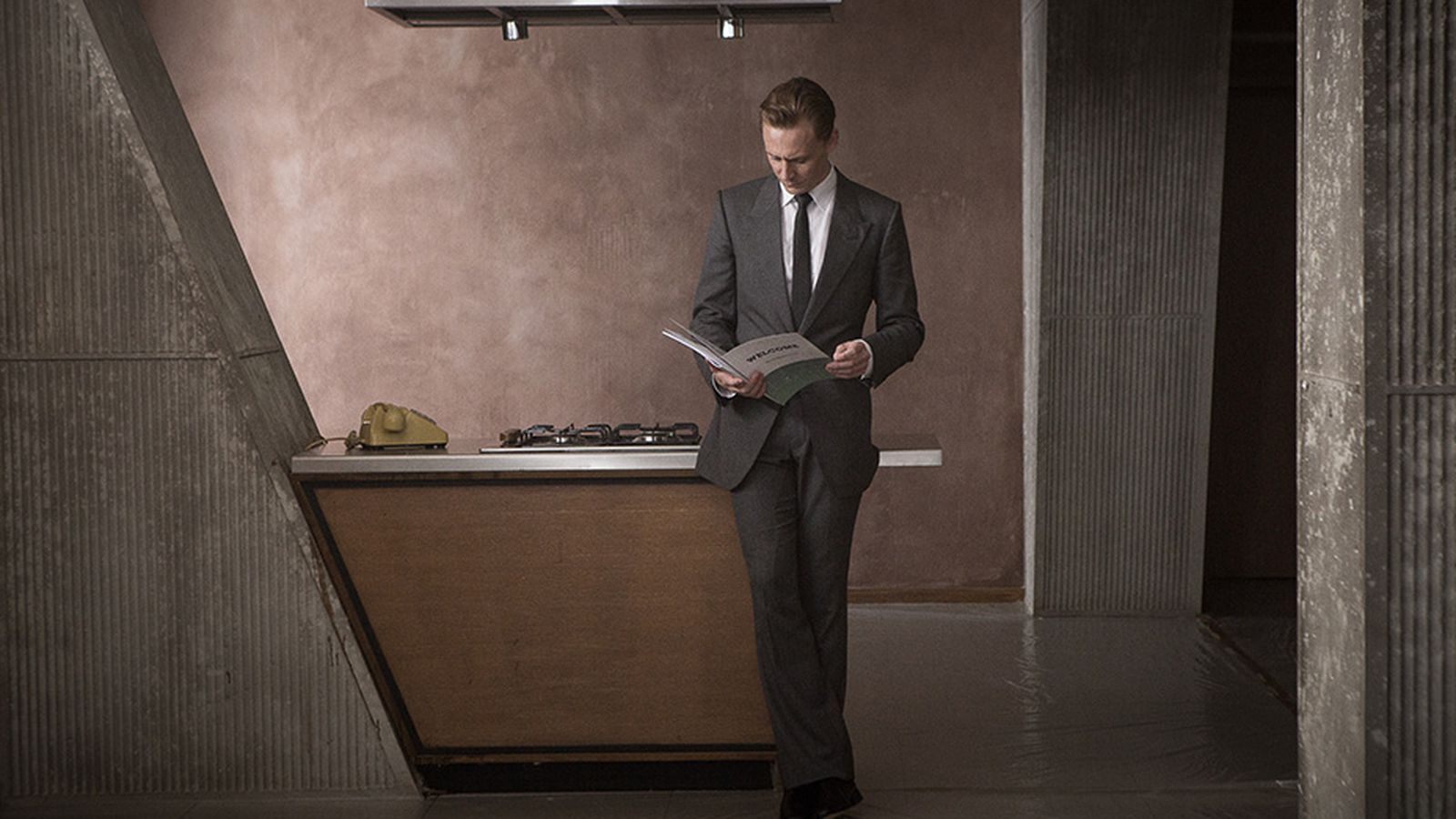
Even as the plot turns choppy, eye-watering marvels of artful detail keep its grip sharp. Mark Tildesley’s lavish production design ranges from mouldering fruit bowls to posh parties decadent enough to cause a French revolution. Indelible money shots include a kaleidoscope of death and a suicide plunge, while the music is practically an extra character. Clint Mansell’s deliciously jaunty, drunk-baroque score ingeniously offsets the darkness; equally startling is a lush ABBA cover by Bristol torch-noir titans Portishead.

As Portishead’s Beth Gibbons coos her ‘SOS’, the cry for help comes too late for the dog. But anyone who likes their cinema off-piste should ignore the sniffier reviews and give Wheatley’s call the chance it deserves: a good shot at some cult love.

Friday, 11 March 2016

10 Cloverfield Lane - Movie Review

It might have the C-word in the title, J.J. Abrams producing and a monster in its midst, but this is not Cloverfield 2. Anyone expecting/desiring a sequel to Matt Reeves' 2008 monster mash will feel disappointed at best, cheated at worse, so let's make that thunderously clear from the off. Rather, 10 Cloverfield Lane is, as Abrams puts it, a "spiritual successor" or "blood relative" set in the (shudder) "Cloververse” – a hint of overlap here, a pinch of DNA there.

In fact, so faint are the echoes, not everyone will be convinced that debut director Dan Trachtenberg's suspense-thriller is anything more than a standalone effort. Originally entitled Valencia, it doesn’t take a cynic to point out that slipping 'Cloverfield' into the title of this Bad Robot production can only boost box-office prospects.

What's not to be doubted is the effectiveness of this tense, claustrophobic three-hander. Gone is the setting of a New York teeming with an astonishingly designed kaiju, scuttling alien-arachnids and unpardonably attractive twenty somethings. Instead we have a remote farmhouse – the address of the title – located 40 miles from Lake Charles in Louisiana, though the action is primarily confined to an underground bunker.

Our way in is, who we meet as she packs her stuff to flee a relationship. So forceful is the car crash that she’s subsequently involved in that we, like her, are stunned when she awakens to find herself hooked to a drip in a bare, windowless room with breeze block walls. She’s also chained.

Michelle’s captor is Howard (John Goodman), slovenly clothed, salt ‘n’ pepper beard, routinely flexing his hands as anger and paranoia surge through his tremendous frame. “There’s been an attack, a big one… I’m not sure yet if it’s chemical or nuclear,” he informs Michelle, warning of a fallout that requires they stay underground for “one year, maybe two”. Is he speaking the truth?

The third player in this psychodrama, mellow, eager-to-please Emmet (The Newsroom’s John Gallagher Jr.), certainly thinks so. He supports Howard’s theory that the Southern Seaboard has been attacked, and offers testimony of an appalling flash, “like something you read in the Bible.”

If Cloverfield assaulted our eyes with seesawing, visceral, found-footage thrills, and our ears with the deafening roar of streaking jets and collapsing skyscrapers, 10 Cloverfield Lane is all about pregnant stillness and screaming silence. Trachtenberg is far more traditional in his filmmaking and suspense techniques, right down to the stabbing strings of Bear McCreary’s Bernard Herrmann-esque score, and here delivers a chilling chamber piece in which a bellowed word or a fist thumped down on a table can impact like the Statue Of Liberty’s head bouncing down a Manhattan street

The presence of Whiplash’s Damien Chazelle among the screenwriting credits speaks volumes: Goodman’s Howard is as terrifying as J.K. Simmons’ Fletcher. He might not stop at verbal and psychological abuse, either – 10 Cloverfield Lane burrows deep into horror territory, threatening, at times, to become Martyrs for the masses.

The atmosphere is one of ambiguity and distrust. At the top of the steps to a triple-locked door gleams a small window to the outside world, and through it can be spied two dead pigs, Frank and Mildred, their blood-blistered flesh seemingly lending credence to Howard’s ranting about Russia, North Korea, al-Qaeda, and extraterrestrials. But then how do you explain the Doomsday books on his shelves, or the very existence of this bunker, with its air-filtration unit and tidy living space kitted out with TV, DVDs, jukebox, fish tanks, plants, electrical stove and refrigerator? He is, as Emmet puts it, “a black belt in conspiracy theory”.

All three characters are strongly played by a cast that was allowed to act out the drama chronologically courtesy of the single setting, and each has a backstory that further ratchets the tension – Howard’s mentions of someone called Megan build into a particularly heart-stopping subplot.

But there is humour, too, with the trapped trio continuing to obey table manners in this most extraordinary of settings, and adapting their rhythms until they co-inhabit with something like harmony – movies viewed include Pretty In Pink and Cannibal Airlines. (The latter is a made-up title but Frank Marshall’s 1993 drama Alive is a close fit.)

Does the action ever unpick its padlocks and move above ground? And, if so, is there anything out there that more firmly locates Trachtenberg’s movie in the “Cloververse”? To answer that would be to do the script, with its incrementally-tightening chokehold, a terrible disservice. Although it’s fair to say that the suspicious, strong-minded and thoroughly resourceful Michelle has one eye forever on that outer door, the other on the keys swinging from Howard’s hip. It’s also fair to say that Winstead’s unflashy, deep-dive performance elicits more emotional investment than any of Cloverfield’s comely cut-outs.

It’ll be too slow-burn for some and others are sure to say it’s a Twilight Zone episode stretched over 104 minutes (to which we say: “And?”), but 10 Cloverfield Lane has enough suspense, shocks and scares to be a monster hit. Let’s hope so – someone needs to give Trachtenberg a wad of cash to go shoot Cannibal Airlines.

Tuesday, 8 March 2016

The Witch - Movie Review

A24
It’s safe to say that writer/director Robert Eggers‘ feature debut, The Witch, giveth no shites about your genre expectations. The film is a powerful slow burn dripping in period detail, dialogue authenticity and atmospheric dread, and while it moves at its own pace the end result is like a Halloween-themed episode of Little House on the Prairie by way of Ben Wheatley’s Kill List.

The oldest daughter, Thomasin (Anya Taylor-Joy), is tasked with multiple chores and responsibilities, but when her baby brother is stolen during a game of peekaboo she finds herself under increasing suspicion by her God-fearing family. Accusations of witchery are lobbed her way by her fraternal twin siblings — who, let’s be honest, add to their pre-existing creepiness inherent in all twins by having conversations with their ominously named goat, Black Philip — and the familial tension continues to ratchet upwards as things go bump in the night and the isolated farm fails to deliver a bounty.

Eggers’ film, subtitled “A New England Folktale,” hits fast and early with the kidnapping/mulching of the youngest family member, but it settles down some as they decide to believe a lone wolf made off with the baby. Life goes on and all of that, but their loneliness and crop troubles quickly bring everyone — characters and viewers — back to the edge. The film’s design, from production to sound, is partly responsible for that as a score made of strings and choral voices works alongside crisply terrifying sound effects to immerse us in this dark new world. That same level of meticulous design and construction is evident in the house, costumes and conversations.

The dialogue adds immensely to that immersion, and Eggers has credited written period accounts with achieving that authenticity. “Did ye make some unholy bond with that goat?” asks William at one point, and it’s both amusingly on point horror-wise and frightening in its implications.

The film does take a minor misstep around its midpoint as the finger pointing grows out of control. Accusations of devilish intervention roll across the screen like a game of whack-a-witch as William reacts violently towards one child, then the next, and then back again without pause. It speaks to the conflict between knowledge and religious belief, where unexplained events could easily be blamed on or credited to supernatural design, and while the back and forth frustrates for a short while it ultimately adds to the uneasy atmosphere. Equally noticeable (and ultimately forgivable) is the film’s desire to build its mystery by intentional misdirection and flat-out avoidance of the truth.We’re made to wonder as to certain characters’ allegiance even though another present in the room should be able to reveal what’s happened.

The cast does strong work, from Ineson and Dickie on down to the twins, but it’s Taylor-Joy and Harvey Scrimshaw (as the family’s oldest boy child) who connect emotionally through powerful, fear-filled performances. Scrimshaw delivers with one scene in particular that sees his character speaking in tongues and terrified of what lies beyond the curtain of our world. Taylor-Joy has the tougher role of balancing her innocence in the face of increasing suspicion.

Make no mistake, The Witch is a horror film, but it’s as interested in the terrors we bring upon ourselves as it is the ones well out of our natural control. The dangers of blind faith, the trouble with interpretation, and the inability to accept the unknown as simply a temporary gap in our knowledge all combine to form a world where man continues to be his own worst enemy. Well, the witch in the woods still isn’t helping matters any either.

Goodnight Mommy - Movie Review

goodnight-mommy-m4v-670
Like many of you I’ve been following the hype and reviews for the Austrian film Goodnight Mommy for months. When twins Lukas and Elias’ mother arrives home from an apparent cosmetic surgery operations they begin to have suspicions that this woman may not be their beloved mother. She’s cold, distant, and prone to violent rages which she takes out on the boys. Isolated by rolling fields of corn and farm houses, the boys are left to their own devices and set out to find the truth. But is it the truth they want?

The film opens with the boys, Lukas, and Elias, playing hide and seek in a giant cornfield and exploring the woods around the house. I immediately got a strong sense of texture from the first scene. Everything in this film has a distinct texture whether it’s the corn field swaying or the blinds in the home that are continuously being opened and shut. I wanted to reach out and touch everything. Once back home the boys run in to find their mother grotesquely bandaged from her surgery making their first encounter unsettling. The language barrier helps with the dread and overall ferocity that spews from Mother (who’s name is unknown) as she explains the new rules in the house. Complete silence, blinds closed at all times, no bringing things in from outside, etc.

Goodnight Mommy suffers from a misleading trailer. Everything that happens in the trailer happens in the first 20-25 minutes.The film is full of haunting imagery, namely the gigantic collection of hissing cockroaches the boys keep and follows a somewhat slow-burn structure which mainly consists of following Lukas and Elias around their giant house and endless trails. The build up does a fine job of inducing a sense of dread in the atmosphere. In a particular scene, Mother grabs Elias by the hair and forces him upstairs away from Lukas and forces him to say multiple times he will not talk to his brother anymore while Lukas bashes his fists into it.

As I mentioned before, Goodnight is highly texturized but that’s not the only interesting aesthetic too. Overall the theme of the film is isolation and this is extremely evident within the home. Despite the giant floor to ceiling glass doors/windows in every room, the house seems very clinical but what I found the most intriguing was the wall art. There are various pieces of artwork hanging up featuring blurred or distorted female figures. This plays heavily into the is she/isn’t she their real mother. I found that little nuance to be a nice touch.

The film is also wrought with disturbing imagery such as the fish tank of cockroaches, a dead cat, and images of torture. Let’s talk about that list bit for a moment. Once the boys decide to find out the truth it’s on like Donkey Kong between them and mommy dearest. I don’t want to give away too much because what occurs between the boys and Mother happens to be where the movie slides into predictability. However, I was genuinely disturbed by some sequences between them. It’s worth mentioning that the twins in this film are quite good child actors. They never grate on your nerves and because they are really brothers it almost feels like they aren’t acting at all when paired together and on their own.

But unfortunately, all the dread and suspense is undermined by the highly predictable ending. I was really annoyed with it honestly because I had enjoyed the film so much up to that point. This was a co-written and co-directed debut feature from Severin Fiala & Veronika Franz who’s only other works consist of a few shorts and a documentary. So perhaps I’m being too critical but the twist ending just really blew it for me. Mad props for filming on 35 mm but…ugh. I will say that this team has enormous potential so I do look forward to what they do next.

Tuesday, 1 March 2016

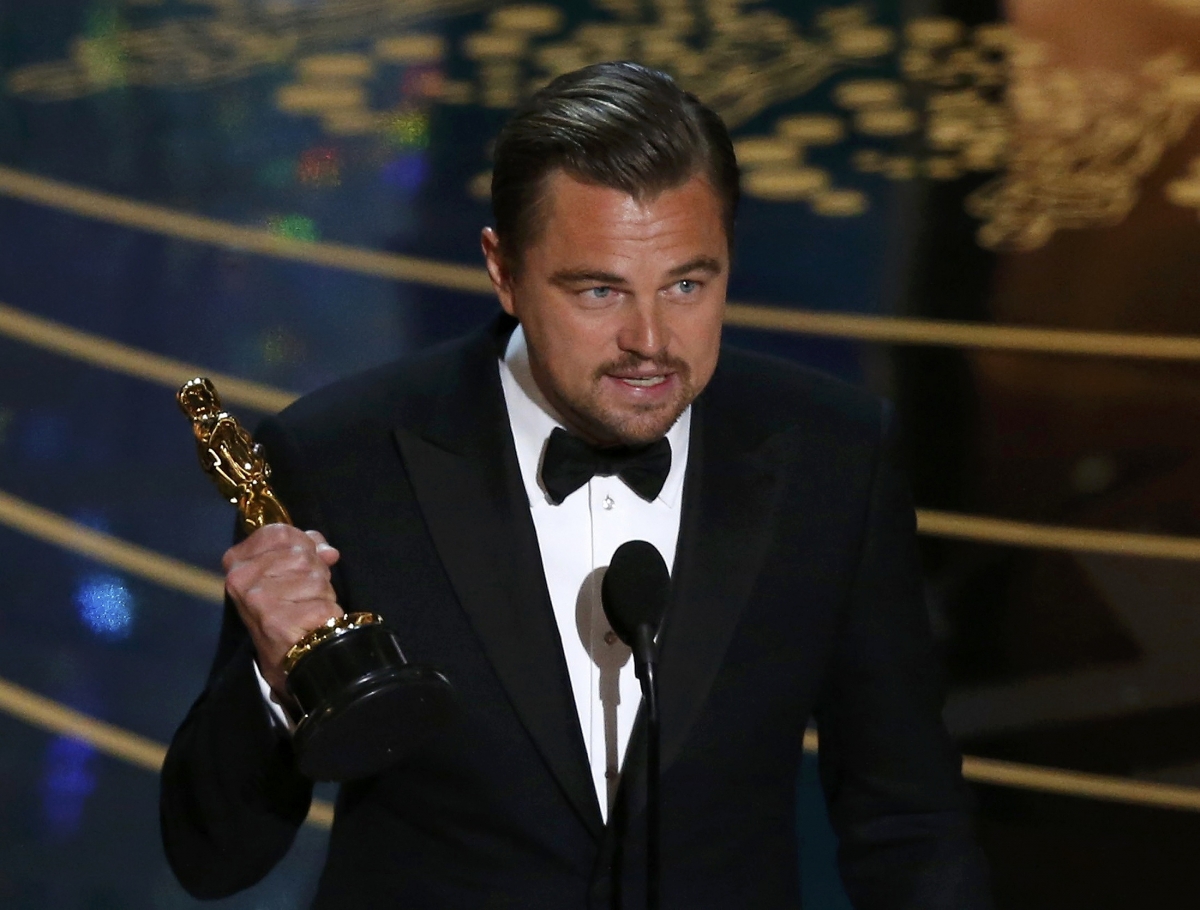
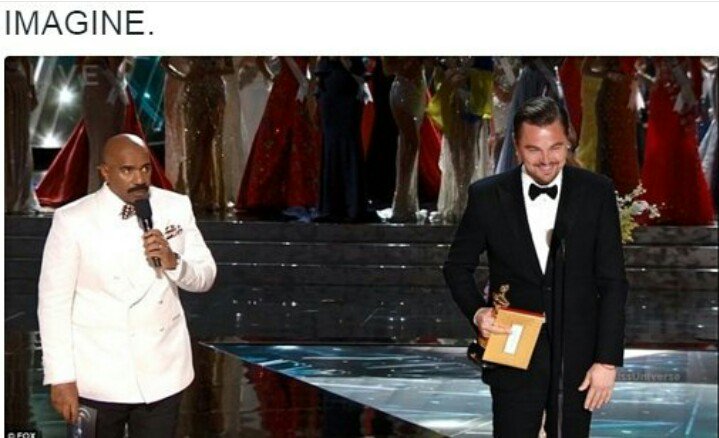
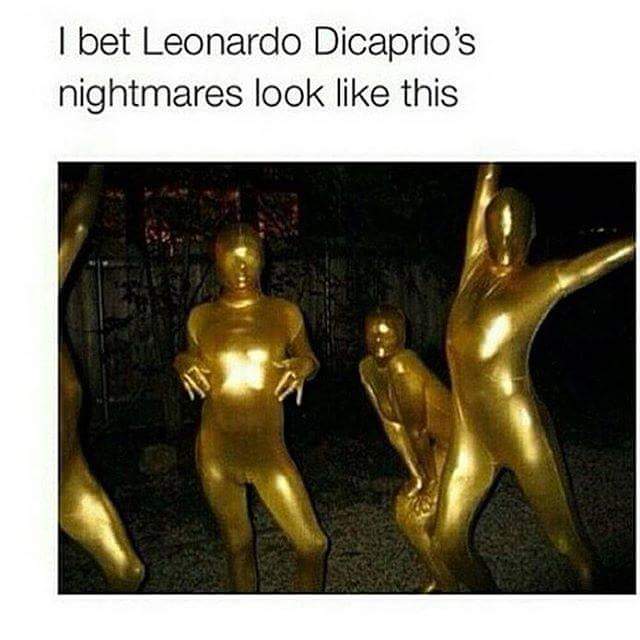
The Best Leonardo DiCaprio Memes


After the long overdue Oscar that Leonardo DiCaprio received at the 88th Academy Awards this Sunday. We have also witnessed the death of the Leonardo DiCaprio Oscar memes. So here are a few of my favorite creations.
Rest in Peace Leo Memes


Eddie The Eagle - Movie Review


It’s not to be taken too seriously, but Eddie The Eagle definitely succeeds as a silly, entertaining underdog story.

From Bad News Bears to Cool Runnings to The Mighty Ducks, it’s hard not to love an underdog sports story. Sure, they can occasionally be formulaic and predictable, but there’s always pleasure in cheering for David in a fight against Goliath, and there’s always tremendous potential for fun character work in like-minded films. It’s become a great cinematic tradition, and it’s one that director Dexter Fletcher’s Eddie The Eagle falls right in line with, mixing kooky period style with a ridiculous and fantastic tale of true passion and fortitude.

Inspired by the feel-good true story that emerged from the 1988 Winter Olympics, the film stars Taron Egerton as Eddie Edwards: an awkward young Englishman who, despite being largely uncoordinated and unskilled, wishes to do nothing in his life other than compete for a medal in the Olympic Games. Throughout his youth, he constantly searches for the sport in which he can actually compete – and has a revelation when he discovers the art of ski jumping (a sport that Great Britain hadn’t competed in for decades).

Leaving his entire world behind, Eddie travels to Germany to learn at an elite ski jumping training center – but being as old as he is, he’s constantly mocked and told that he doesn’t have a chance. That is, until he catches the eye of an American, retired, and consistently drunk former ski lumping champion named Bronson Peary (Hugh Jackman), who begrudgingly agrees to take Eddie under his wing and teach him how to compete on the global level.

Admittedly, from that plot description, you can probably predict each beat of Eddie The Eagle as it plays out, but what the film lacks in big surprises it makes up in miles of heart and really perfect style. It’s clear that Dexter Fletcher knew exactly what kind of movie he was making going into the project, as it functions as a wonderful throwback to the era of classic underdog sports movies – complete with a rich, synth-filled score from Matthew Margeson that simultaneously keeps you pumped for the action while winking at the silliness of its subject matter. You’ll run out of fingers and toes trying to count the number of overused sports-movie tropes that find their way into the story, but because it’s done with such knowing flair instead of sheer laziness, it all feels strangely refreshing and fun, instead of laborious.

It’s worth mentioning that the film also takes many liberties with the story of Eddie Edwards – to the point where most of the movie is basically fictionalized – but in this day and age, that tactic actually feels worth applauding. Cinemas are regularly filled with by-the-book biopics that have no interest in straying from the details of the true story (possibly due to fears of inaccuracy claims), but Eddie The Eagle rather brazenly defies this approach and fabricates some rather huge parts of the story (such as the existence of fictional coach Bronson Peary, for starters). While some may admonish the film for this fact, it’s actually really great to see filmmakers (including Dexter Fletcher, in addition to screenwriters Sean Macaulay and Simon Kelton) who understand the line between emotional truth and factual truth, and use it to their advantage by making a more compelling story from the source material. Eddie The Eagle might not get everything completely right, but there’s also no denying that the movie is a great reflection and representation of its central figure.

Of course, a lot of that spirit comes from the actual portrayal of Eddie, and in playing a role that is a complete 180-degree turn from his breakout performance in last year’s Kingsman: The Secret Service, Taron Egerton not only demonstrates great range, but also some very abnormal and fascinating charisma. Sporting a pair of glasses that take over half his face, and a prominent under bite that makes him look consistently confused, Eddie is an awkward guy and unconventional protagonist, but Egerton really makes you care about his success simply by selling his extreme passion and unwillingness to be put down by all the “No’s” that he has heard throughout his life. Add in the great chemistry that he shares with Hugh Jackman (who puts in a fun, engaging performance of his own), and you realize that Eddie The Eagle will be one of the films we look back on with extreme fondness as Egerton rises to greater prominence in the industry.

Looking back, the 1990s was a great era for family sports movies - with the release of not just the aforementioned Cool Runnings and The Mighty Ducks, but also The Sandlot, Rudy, and more – and Eddie The Eagle feels more in tradition with those films than anything we’ve seen in a while. It’s not to be taken too seriously, but it definitely succeeds as a silly, entertaining underdog story, so understand that going in, and you will have fun.

Alien: Covenant and The Predator Get New Release Dates


Alien V Predator: Requiem poster (crop)
Not to be distracted by the small matter of the Oscars this weekend, studio Fox have been doing a spot of release-date reshuffling. And while the news is muted for X-Men spin-off Gambit, it's more positive for the return of two monster franchises. Alien: Covenant will now be with us sooner than we thought, while The Predator now has a firm date for his unleashing.

Unlike its predecssor Prometheus, which came out in December of 2012, Fox have now staked Ridley Scott's Alien: Covenant as a full-on summer tentpole, picthing it on August 4, 2017. That shows a good deal of confidence on Fox's part that a "proper" new Alien after the curveball of Prometheus is a big thing indeed. It also gets it safely out of the way of Star Wars: Episode VIII, with its only direct competition on its new date currently Pitch Perfect 3 and Blazing Samurai.

Shane Black's The Predator, meanwhile, opens on March 2, 2018, likely more-or-less kicking off that year's "summer" blockbuster season. It currently shares its slot with an as-yet unnamed Warner Bros. big-hitter: probably a DC superhero movie; possibly the Ezra Miller- starring The Flash (Aquaman is slated for July the same year).

Fox has also shifted Tim Burton's Miss Peregrine's Home For Peculiars out of its packed December slot into a quieter berth on September 30 this year. Avoiding Rogue One and Assassin's Creed, it'll now face Peter Berg's oil rig disaster movie Deepwater Horizon.

Alien: Covenant stars Katherine Waterston, Michael Fassbender, Demián Bichir, Jussie Smollett, Carmen Ejogo and Danny McBride. It's set ten years after Prometheus, has proper Aliens in it, and has been confirmed by Ridley Scott as aiming for an R-rating: itself significant for an August blockbuster.

Miss Peregrine’s Home For Peculiars is adapted by Jane Goldman from Ransom Riggs’ novel, and finds Hugo’s Asa Butterfield discovering the ruined gothic institution once run by Eva Green. Samuel L. Jackson, Judi Dench and Allison Janney are some of the inmates who never left...

And we don't know much about The Predator yet, but we're very excited.

Friday, 26 February 2016

Anomalisa - Movie Review


There's everything else happening in America cinema, and then there's whatever Charlie Kaufman is up to.

Ever since 1999's "Being John Malkovich," he has been on a short list of American screenwriters whose work is so original that he must be thought of as an auteur, even though film is supposedly a director's medium. Formidable filmmakers have adapted his scripts, including Spike Jonze("Malkovich" and "Adaptation") and Michel Gondry ("Eternal Sunshine of the Spotless Mind" and "Human Nature"), but however assured the results, they were still unmistakably Charlie Kaufman movies, speaking their own alternately down-to-earth and elevated language.

Kaufman's mix of mordant humor, broad slapstick, self-aware storytelling devices, and images and language drawn from psychoanalysis, poetry and dreams coalesced even more strongly in his directorial debut, "Synecdoche, New York," about a playwright spending years (or a lifetime?) rehearsing and rewriting a massive production that was about his life but seemed indistinguishable from it. The undercurrents of wonder and despair ran deeper there than in any other Kaufman story, even "Eternal Sunshine."

They course throughout "Anomalisa" as well. The film could be described as a midlife crisis drama with puppets, about a depressed corporate efficiency expert (voiced by David Thewlis) who hears every voice, male or female, as the same voice (Tom Noonan's), and who becomes infatuated with a shy young woman (Jennifer Jason Leigh) who is attending his seminar in Cincinnati, Ohio. "Anomalisa" is based on an "audio play" by Kaufman. It was originally presented as part of a series of such plays, in collaboration with Joel and Ethan Coen and composer Carter Burwell, who has scored movies by both directors, including this one. The actors performed their lines while Burwell conducted a live score and sound effects artists provided background noises. Kaufman co-directed this film version with stop-motion animator Duke Johnson, whose work includes the "Community" episode "Abed's Uncontrollable Christmas." It puts a "visual track" to Kaufman's audio play. The puppets are physically recognizable as "puppets," down to the segmented lines of their "face plates." But they move so realistically and speak so naturalistically (even when they're skipping across the tops of desks, as in the image at the top of this page) that there are times when you may forget that they're not people.

The puppet characters in most other films are more sprightly. They exist mainly to amuse. The characters in "Anomalisa" unsettle. Their plight makes you think about 21st century loneliness, despair and alienation— subjects that would be unpalatable if Kaufman didn't write his characters so compassionately and with such dry humor. Kaufman and Johnson shoot the characters in a carefully considered way, not cutting much, just sort of letting them sit there, and be. There are a few stealthy "long takes" in this film that would be much praised if they appeared in a live-action feature—sequences where the filmmakers simply follow characters as they traverse levels of the hotel, or have sex in a slab-like bed.

It might sound strange to say, but this puppet movie gives you a more accurate sense of what it's like to spend a few days in a nice hotel in a city of bad memories than most live-action films ever do—not that that's necessarily the kind of description that will make people want to rush out and see "Anomalisa." Like so many Kaufman characters, the ones in this movie are struggling, stumbling even, towards what might be a mirage of happiness, while battling both their own social conditioning and pathologies and the bland indifference of the world around them—a world that includes billions of other people who all think they are the stars of their own life-movies, and at times seem deeply frustrated by the fact that they haven't experienced one of those transformative moments that tell moviegoers, "Everything is going to be fine for this character now, don't worry."

Thewlis' Michael Stone is clearly unhappy with his work, his marriage, even his child. He seems disconnected from himself and the world. Not much happens to him in the plot sense. His plane touches down in Cincinnati. He settles into the hotel and orders room service while pacing and smoking a cigarette. He impulsively invites an old flame out for a drink hoping to get lucky, oblivious to the fact that he hurt her so terribly that it's painful for her to be in the same room with him.

Then he becomes smitten with a guest at the conference, a young woman who wears her hair to one side to hide a scar on her face. Her name is Lisa (Leigh), and she's the only character in the film who has her own voice (everyone else is voiced by Tom Noonan, remember). It's love at first sight—or Michael thinks it is. He seems to view Lisa as a redemptive figure, somebody who will pull him out of his existential malaise. But by that point we've spent enough time with Michael to know that he's not the best judge of what he needs. In fact his judgment is consistently terrible, and in typically Kaufman-esque fashion, we move from feeling for Michael and rooting for him to be happy to wondering if he's got some sort of debilitating emotional or mental condition (beyond the titular disorder). Then we progress into thinking about ourselves as much as Michael, contemplating our own fears, weaknesses, blind spots, and repetitive behaviors in relation to a world that barely seems to notice us.

For all its visual audacity and honest feeling, "Anomalisa" is a modest, even slight work, aesthetically sealed off from the same reality it engages. It ends a bit abruptly, just when it seemed to be ramping up towards a more definitive statement of some kind, and the general outlines of Michael's story aren't new. (Middle-Aged, Upper Middle-Class Male Grappling with Despair is pretty much a genre by this point.) But there's so much beauty and sadness in it, and so many exquisitely conceived scenes (including an impromptu musical performance that ranks with Kaufman's greatest moments), that it would be miserly to underrate it. Whether you leave the film ecstatically impressed, indifferent or disappointed, you will know you've seen something unique. Too many movies speak in a boringly typical storytelling voice. This one speaks in a voice as singular as Lisa's.

Tuesday, 23 February 2016

Triple 9 - Movie Review

John Hillcoat’s Triple 9 sees Chiwetel Ejiofor (12 Years a Slave) playing a bad-ass alongside a team of thieves and corrupt cops who find themselves in the deep end of organized crime.

‘999’ is led by a notable cast, which include Aaron Paul (Breaking Bad), Norman Reedus (The Walking Dead), Clifton Collins Junior (Star Trek), and Anthony Mackie (Captain America). After the enraging death of one of the crew, Chiwetel’s character is forced to take on a near impossible task of stealing some files for the Russian mob, headed by Kate Winslet, whose self-consciously languid cigarette-smoking bring a slight element humor to the otherwise gritty two-hour thriller.

Daryl and Jesse as brothers?! If you’re a fan of Breaking Bad and The Walking Dead you’ll know what we mean. It makes for an interesting watch when two iconic TV characters come together to pull off mission impossible, but we’ll leave our fantasy of a Breaking Bad and TWD crossover at the door. Yet to transcend typecasting, Aaron Paul’s character felt a little like Jesse’s long-lost twin, only he’s not driving around the desert making meth in an RV; though refreshing seeing Norman Reedus looking well-scrubbed for once.

In order to successfully pull off the heist, the authorities must be distracted elsewhere. Their solution is to pull a “triple 9” AKA as an “officer down” call. Casey Affleck plays partner to one of our corrupt cops. Targeted as the “mark”, uncertainty, betrayal and fear embroil the team after he survives the attack. Like dominoes, bodies fall one after the other. Filled with enough nudity even HBO might re-evaluate it’s airing, Triple 9 will hold your attention, unapologetically throwing you shocker after shocker.

With enough blood, guns, boobs, and over-saturation to keep you desensitized for a while, could you survive with not seeing this film? Probably, as it rarely strays into a field of originality. We’ve seen the decaying results of inner-city demographics before. Triple 9 serves no further purpose, other than to further perpetuate negative stereotypes. Even Woody Harrelson plays a familiar role, that of a corrupt southern cop with very few ethical boundaries.

With its testosterone-fueled shoot-outs and not-so-subtle decapitations, Triple 9 might be a film you’d stay in and watch on a Friday night, but, despite its top-notch cast, there’s little here to lure you to your nearest multiplex. With its electric score and rough aesthetic, Triple 9 is definitely for fans of the no-nonsense, straight-to-point action thrillers – think Oceans 11, Inside Man, and The Equalizer all wrapped into one – but this would seem to be a case of identity theft.

Wednesday, 10 February 2016

Indie Film News - 10th February 2016

Dark Dignity

Displaying Cast IvonaWillaFrig Photo - small for Twitter.jpg
Dark Dignity is the story of the women of a nomadic tribe, searching for a new home five years after the world crumbled. Civilization as we know it is gone due to The Infected that plagued North America and beyond.
This diverse mix of former suburbanites – teachers, doctors, police officers – must always be prepared to fight for survival in the badlands of rural landscapes and desert vistas. The dangers hiding behind every shadow may be thieves or gangs… or perhaps creatures once human and now forever changed.


A Legacy of Whining
The ghosts of both past and present collide as two former high school friends reunite after thirty years and embark on a darkly humorous nocturnal fever dream of a journey where old emotions and resentments bubble to the surface once again. Written by Ross Munro
I have been granted an exclusive online viewing of this movie so that I can review it, the review will be up withing the next day or so.


Street Shots
Go check out my friend's blog "Street Shots". Posts are about photography, skating, street culture etc.


Twitter - @StreetShots_ds
Displaying #ALegacyofWhining_Bordello13.JPG

Monday, 8 February 2016

Hail, Caesar! - Movie Review

If self-plagiarism were a criminal offence, the Coen brothers would be facing a long stretch in San Quentin.

Hail, Caesar! shares the Hollywood-studio setting of Barton Fink, and, no doubt to the delight of Coenverse theorists everywhere, the exact-same fictional studio: Capitol Pictures (they’ve come a long way from Wallace Beery wrestling flicks). Its plot, such as it is, hangs loosely on a kidnapping hook, just like The Big Lebowski, whose Busby Berkeley dream sequence also finds good company in Hail, Caesar!’s elaborate musical numbers. It’s slathered with the ’50s period sheen of The Hudsucker Proxy, tussles with similar existential issues to A Serious Man, and gathers a sprawling ensemble of big names in character-actor roles, as Burn After Reading did. There is an ill-fated suitcase full of money, a shouty fat man, a little yapping dog, philosophical monologues from an eccentric white-hair, and George Clooney mugging.

Though it’s not really Clooney’s film. As kidnapped matinée idol Baird Whitlock, another George-shaped Coen creation who’s two steps behind the rest of the room, he is merely their MacGuffin; like the baby inRaising Arizona, only not as smart and a touch more helpless. It’s Josh Brolin as Capitol’s Head Of Physical Production, Eddie Mannix, who drives things — albeit not always using the most direct route.

Mannix, the closest thing this movie has to a main character, is another of the Coens’ serious men. A fixer for the studio, there’s a little of Tom Regan from Miller’s Crossingabout him, though he’s armed with petty cash rather than a pistol. He will do something as objectionable as slapping an actress for taking part in an unsanctioned photo-session, but is also wracked with Catholic guilt over lying to his wife about quitting smoking. And there’s a greater temptation than tobacco: a big-time job offer from aerospace company Lockheed. “Aviation is serious,” he’s told. “You won’t be shouldering a load of crackpot problems.” But Mannix — played by Brolin as a charming bruiser who’s not quite as unflappable as he’d like people to think — thrives on the crackpot problems.

Of which Whitlock’s disappearance is but one. There’s also the matter of cherub-faced B-Western star Hobie Doyle (Alden Ehrenreich) being roped into a pristine, drawing-room drama, to the despair of its mannered English director, Laurence Laurentz (Ralph Fiennes). Then there’s the Esther Williams-ish mermaid (Scarlett Johansson), facing the scandal of being both pregnant and unmarried. Plus, rival twin-sister entertainment columnists Thora and Thessaly Thacker (Tilda Swinton, tasked with basically playing a double Hedda Hopper who’s at war with herself) are on Eddie’s back, too.

This is the Dream Factory operating at maximum productivity, and Joel and Ethan revel in the absurdities of the studio system, whereby directors can’t pick their stars, and stars have to change their image at the wag of a fat finger and date who they’re damn well told. On the one hand, the brothers are snickering at the silliness of how things used to be, but on the other they are celebrating this bygone Golden Age. Because, beyond all the trademarks, gags and Georgian gurning, whatHail, Caesar! essentially amounts to is a series of impressively mounted pastiches.

There’s the Johansson-centred synchronised-swimming sequence, featuring a giant, mechanical whale. There’s a full-on, astonishingly inventive song ’n’ dance number featuring a tap-dancing Channing Tatum and a bunch of sailor-boys lamenting that “We Ain’t Gonna See No Dames”. There’s cowboy Doyle’s latest picture, a twee Western named Lazy Ol’ Moon, complete with a cantankerous prospector-type. And there’s Hail, Caesar! itself, which glows convincingly with all the grandeur and pomposity of a true, old-school Hollywood epic. In each case, the Coens’ A-crew (including Mary Zophres on costumes, Roger Deakins as DP and Carter Burwell scoring) nail the genre perfectly. It’s an astonishing technical achievement.

Where Hail, Caesar! falters, though, is in the glue that binds all these elaborate sketches. Mannix’s travails don’t entwine satisfactorily, and while the flourishes are fantastic, none really move the story forward. It’s clear the Coens aren’t interested in sustaining the sense of mystery at who exactly has starnapped Whitlock, so it’s hard for the audience to care either when the big reveal hits. And, as good as Brolin is, the character lacks the culty appeal of, say, The Dude in The Big Lebowski, whose shambolic nature matched that film’s saggy, shaggy storytelling. It’s not like the film is hollow — hidden at its heart, in fact, is a struggle for the soul of Hollywood — it’s just that it feels more like a series of pleasant diversions rather than a single, solid journey.

That said, if you’re a committed Coenophile (as we all should be, right?), you’re unlikely to be too bothered by all this. Likely to fry the mind of anyone who hasn’t yet built up a resistance to the brothers’ foibles and predilections over the past 16 films, it’s easily the most Coen-y Coen movie they’ve put out. But then, they are stealing from the best.

Point Break - Movie Review

Takes the outline of the original and translates it for an audience that has chugged 15 Monster Energy drinks and stayed up for a week mainlining Dude Perfect videos.

“If a tree falls in the forest and no one puts it on YouTube, did it really happen?”

This is an actual line of dialogue, delivered with total sincerity, from Ericson Core’s remake of Kathryn Bigelow’s Point Break. It’s one of several dumb “wisdoms” suggested by a screenplay that’s littered with bubblegum philosophy. But if you’re OK with the pseudo-Zen sentimentality of the insta-upload message in that statement, then the shallowness of this derivative and unnecessary reboot might not bother you as much as it did me. The original Point Break wasn’t Shakespeare, by any means. But it was never insultingly stupid. This is.

Core’s Point Break essentially takes the outline of the 1991 genre thriller starring Keanu Reeves and Patrick Swayze, but translates it for an audience that has chugged 15 Monster Energy drinks and stayed up for a week mainlining Dude Perfect videos. In the process, Core misunderstands everything that was important to the original film, believing that ramping up the “EXTREME” at every turn will lead to a more rewarding experience. It isn’t. It’s exhausting. Remember the exciting skydiving sequence in the original? This time out, you are going to get large-scale skydiving, surfing and motorcross stunts in the first 15 minutes! But the skydiving sequence from the first movie mattered because by the time it arrived, you cared about the characters involved in the stunt. The new Point Break people have as much depth as actors in a Mountain Dew ad.

Right off the bat, Point Break 2015 makes a fundamental error in setting up Johnny “Utah” (Utah is a nickname this time out, which makes no sense). Keanu Reeves’ version of the character in 1991 was a former athlete but a clean-cut and dedicated FBI agent who reluctantly joined a group of surfers suspected of robbing banks wearing masks of dead Presidents. (The crooks wear similar masks in one scene of the reboot, and never again, because the remake doesn’t get why that gimmick was important.) When Reeves’ Utah gets pulled into the wake of Patrick Swayze’s Bodhi, it goes against everything that Utah stands for, setting up an internal conflict that transcended the impressive stunts.

Point Break 2015 paints “Utah” (Luke Bracey) as a former extreme-sports addict who recognizes the actions of Bodhi (Edgar Ramirez) and his crew because they behave the way that he one did. No internal conflict. No stakes in the game. It’s strange, too, how after one criminal mission at the start of the movie, Bodhi and his team of elite athletes stop committing crimes (hence, the lack of presidential masks) and really don’t create any conflict that would need the FBI… taking the wind out of the movie’s sails. We’re left with new versions of Bodhi and Utah, and the comparisons between the original and the remake – which are inevitable when reviewing this movie – show how wrong this remake is. Swayze’s Bodhi was a charismatic Zen flame drawing Keanu’s moth. Ramirez’s Bodhi belongs more to the tattoo-and-leather Euro-trash category of extreme-stunt seekers. There’s far less appeal – to both him, and to the movie.

Is Point Break 2015 bigger than the original? Yep. Where Kathryn Bigelow limited her action to the sleepy beach communities of Southern California (for the most part), Core’s Point Break is a global affair that has “Utah” chasing Bodhi to the far-reaches of the Earth to stop him from… well, again, he’s not really committing any crimes, so I’m not surewhy the FBI is so hellbent on bringing Bodhi to justice. The members of Bodhi’s gang are interchangeable and forgettable. Teresa Palmer has a painfully thankless role as the Mother Hen of the gang, cooking meals for The Boys after they complete their missions, and sleeping with “Utah” because the script thinks it needs an emotional conflict. Does bigger mean better? Nope. Because really, how often does “bigger” equal “better” when it comes to Hollywood remakes?

“Let’s just be here.” That’s another pearl of wisdom spoken by a serene criminal in Point Break 2015. When you are at the movie deciding what to see, however, you should just be anywhere else.