Showing posts with label film. Show all posts

Wednesday, 14 December 2016

Rogue One: A Star Wars Story - Spoiler Free Review

The narrative of Rogue One is sufficiently simple to explain. We join a group of dissidents as they look for plans that will eventually help Luke Skywalker destroy the Death Star. Rogue One is more than just a prequel. It works both as a standalone film and as a form of fleshing out the existing Star Wars franchise.

Let’s answer the question anyway. Such rare creatures will find something like a self-contained narrative. The movie opens with Orson Krennic (Ben Mendelsohn), a director of weapons research for the Empire, arriving with the eagerly anticipated "Death Troopers" at the home of martial engineer Galen Erso (Mads Mikkelsen). The Star Wars films have always had clear samurai and Wild West influences. The opening tends more to a Western than Kurosawa as Krennic drags Galen off while Jyn Erso, the captive’s daughter, watches terrified from nearby rushes.

Jyn is rescued by a muttering Saw Gerrera (Forest Whitaker) and spirited away to the life of a mildly criminal nomad. Galen Erso is forced into designing the Death Star, but he has not turned to evil.  Jyn Erso falls in with a gang of hooligans who, in defiance of Rebel command, set out to locate the plans Luke will one day require.

Star Wars fanatics needing commentary on and references to the wider canon will not be disappointed. Minding the current hysteria about spoilers, I will be no more specific, but we can safely praise the computer boffins for two creations that, even in this time of digital wonders, fairly take the breath away. Laamu Atoll in the Maldives provides a beautiful closing location that looks to have been peeled spectacularly from the cover of a golden-era science-fiction paperback.

K-2SO, the franchise’s latest robot, voiced elegantly by Alan Tudyk, is so charmingly lugubrious – part Iron Giant; part Marvin the Paranoid Android – that one can’t help but yearn for a reboot somewhere else in the universe.

Rogue One’s greatest selling point is, however, an old-fashioned, 21st-century human. Felicity Jones is endlessly charming and spirited as the grown Jyn Erso: a brigand who can’t sustain the amoral pose. Jones’s achievement is all the more remarkable given the blandness of the dialogue.

Other members of Jyn’s posse struggle to establish any sort of personalities. The great Donnie Yen is there. The equally fine Jiang Wen is here. There is a lot of potential with the characters but they failed to succeed anything further than one dimensional personalities.

Happily, the final conflagration is sufficiently punchy to push thoughts of such underdevelopment from the mind. Gareth Edwards shoots that sequence in the style of a second World War battle. Almost to the same quality of Saving Private Ryan.

Monday, 29 August 2016

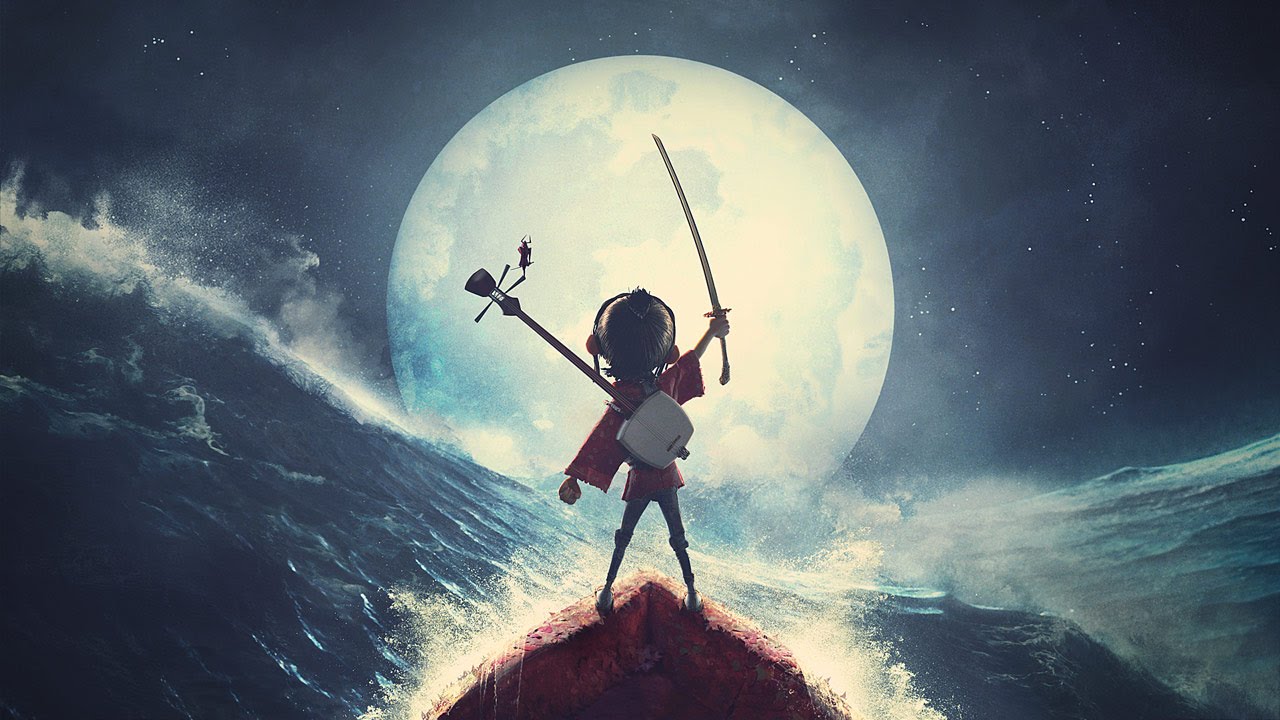
Kubo and the Two Strings - Movie Review

Image result for kubo and the two strings
Kubo and the Two Strings begins with a thrilling, immaculately animated prologue, a tale of legendary heroism that sets a precise tone for the storytelling-obsessed film to follow. Once, a woman steered her boat through a troubled ocean, struggling to protect her newborn child at all costs. With only her magic and her shamisen (a Japanese stringed instrument), she manages to find her way to shore, cutting through the roiling waters like a certain prophet before her. But in Kubo’s world, magic and divinity alike are more complex than they seem. And survival isn’t necessarily a happy ending. Not when your child has lost one of his eyes to the forces of evil, at such a young age.

Laika, the visionary hybrid animators behind Coraline, Paranorman, and The Boxtrolls, have managed to craft a film that expands on the virtues of their predecessors, while also dipping a toe or two into more familiar, accessibly riveting territory. The film manages to capture the latter film’s gentle, innovative whimsy, Coraline’s kid-friendly perspectives on danger and consequence, and the emotional resonance that made Paranorman a treat. And it’s all in service of a story that generates consistent laughs and excitement while also exploring deeper questions about the value of living in a world fueled by greed, tyranny, and fear. Like the studio’s previous films, Kubo dares to dream that entertainment aimed at a younger audience can hold the depth and intelligence of any other substantial piece of filmmaking.

And if the film feels just a little more traditional than the boundary-pushing, family-friendly genre filmmaking Laika has explored in the past, Kubo is still rife with riches for viewers of any age. The titular hero (Art Parkinson, in a voice performance mercifully free of treacle) is restless but loyal, going into a nearby village in the daytime to deliver riveting performances of legends his mother passed down to him, and tending to her after the sun goes down. She’s catatonic much of the time, and even when enlivened, she struggles to retain the stories she so desperately wants to share with her son. Integral to Kubo from its early scenes is the power of storytelling as an innately human concept; through stories, we empower the young, articulate the tragedies of the world, and even uphold the spirits of those who have already left us. This includes Kubo’s father, a great warrior who died some years ago attempting to protect his family.

Kubo has some of the same magic in him as his mother does, and he uses it to rivet the villagers with retellings of his father’s war exploits and other stories, using ornately conjured origami creatures that he builds with magic. (The film’s use of formed and collapsed sheets of paper throughout is stunning by itself, to say nothing of the ways in which it uses this visual device.) The tale usually begins the same: “If you must blink, do it now.” It’s the way in which Mark Haimes and Chris Butler’s screenplay opens the film, and it’s as solid a testament as any to the value of keeping your eyes peeled throughout Kubo and the Two Strings.

The film is a visual feast from that tense opening to its sublime, heartfelt, golden-lit final shot, and in virtually every frame in between. Kubo’s yen for showmanship is one shared by director Travis Knight and the Laika team, but to its credit, Kubo roots its many breathtaking visuals in a simple but almost always effective story of love and adventure. When Kubo stays out past dark by accident one day, having attempted to communicate with his dead father during a local ritual paying tribute to the spirits of the dead, he draws the attention of his mother’s sisters (Rooney Mara, voicing both with an eerily icy lack of affect). They are witches in the truest sense, beings of powerful magic who want Kubo’s other eye at all costs, for unknown reasons. And when his mother purges the last of her magic to grant Kubo the chance to escape, he embarks on a quest to unify the disparate pieces of a legendary suit of armor which would allow him to defeat the sisters, and their nefarious father, the Moon King (Ralph Fiennes).

As tends to happen on quests, Kubo eventually finds himself running into a cast of wild characters, and if some of these moments make Kubo and the Two Strings come off a little more like a standard kid’s adventure story at times than its lyrical early moments initially suggest, they’re executed with a rare and striking kind of elegance. A wooden idol that Kubo held for years becomes Monkey (Charlize Theron), a sentient and dryly sarcastic ape tasked with helping Kubo find the three different pieces of armor. Along the way, they also happen upon Beetle (Matthew McConaughey, scattered and witty), a onetime compatriot of Kubo’s father who’s been cursed to forget all his memories of his life before, and also inhabit the multi-limbed body of a giant beetle, but with a human face.

While this review may already have touched on the many visual splendors the film offers, their power cannot be overemphasized. From the dusky fuschias and burning reds of Kubo’s campfire stories, to the blistering expanses of snowy white tundra, to the navy blues and blacks of a dilapidated fortress, Kubo and the Two Strings makes effective use of every imaginable color on the spectrum, and then some. A nightmarish battle involving a gigantic skeleton with a head full of swords is backed by vibrant notes of emerald green that make the skeleton’s hideous form protrude from the image. An underwater “garden of eyes” is full of hideously bulbous creations, black stalks topped by hideous oculi with a nauseous yellow where the whites might normally be. There isn’t a single sequence inKubo that fails to leave some sort of impression with its vivid imagery, and Laika’s trademark fusion of CGI and stop-motion animation gives the film’s many action scenes a tactile, physical quality that leaves the film several cuts above the vast majority of its peers.

Where so many modern animated films use their inflated budgets to pop the eyes and cover for a general lack of cohesive storytelling, Kubo understands the value of simplicity. Now, the film does have a tendency to overstate itself, particularly in its later minutes; its story is so classical in its notions of heroism and an open heart that the film’s eventual shift from a subtler, more understated kind of storytelling to that of a traditional hero’s journey feels extraneous after a point. And yet, a simple story told well can still be effective if the emotional resonance underneath it comes through. In Kubo, it absolutely does, thanks to the uniformly excellent voice performances. Theron is a particular standout, her Monkey transcending the kiddie-movie trappings of the character to offer an effective, wrenching mixture of deadpan humor and tentative warmth. (The animation deserves equal acknowledgment, Monkey’s features turning wistful or enraged or sad with impeccable accuracy and authenticity.)
Image result for kubo and the two strings
If Kubo does eventually hammer home its moral lessons, they come at the end of a film that speaks truth to the inevitability of letting go, and the power of gratitude for the riches that life does allow from time to time. When we age, and prepare to leave the world, what we leave behind is our truest legacy, and in a cultural period fraught with a general sense of exhausted nihilism, here is a film that believes in humankind’s capability to learn from its prior sins, to be better than it once was. To remember the tragedies of its past, so that they are never repeated. The film’s closing moments reject the cloying ease of the “happy ending” in favor of something more philosophical, honest, and emotionally rich, and it’s a superior piece of storytelling for it. In its way, Kubo and the Two Strings is at once a family film for any time, and one very specifically for this one. Sometimes, it’s easy to forget the story, because it hurts to remember or because we just choose to forget. In stories, we find eternal life.
Image result for kubo and the two strings

Tuesday, 21 June 2016

Independence: Day Resurgence - Movie Review

You remember the first alien invasion, back in ‘96? The White House got the explodo. Will Smith was chairman of Earth’s welcoming committee. We killed the alien mothership with an apple computer. It was a simpler time where we didn't need one of the Hemsworth brothers to save the world time and time again.

Cue 2016 (and Independence Day: Resurgence). Set 20 years after the first Independence Day, humanity has come together, co-opted the alien tech salvaged from the first invading force, and done everything possible to prepare in case the aliens ever came back. It’s easy to see those two decades between the movies actually happening.

It might not be something you’d expect from the sequel to Independence Day, but there’s a sophistication to the world building, and it’s a tragedy how little time the movie has to explore it. The post-war golden age feels fresh and clever, but we only get the barest taste before things start exploding. And the explosions come early and often.

Director Roland Emmerich--who was hemmed in by ‘90s special effects when he made the first Independence Day--is back at his annihilative best. It feels like the director behind the wanton destruction in Godzilla, The Day After Tomorrow, and 2012 finally has the means to kick things up to an interplanetary scale. If you go see Resurgence on a big screen, this is what you’re paying for.

There’s hardly a reprieve for the remainder of the two-hour running time. It all looks great, but it’s hard not to get a little fatigued before the big finish. There’s also little room for escalation after the initial, impressive reveals, so the ending felt much flatter than it should have.

The majority of the 1996 cast returns for Resurgence, but 20 years and a Law & Order spinoff later, Bill Pullman and Jeff Goldblum aren’t exactly the blockbuster box office draws they once were.

That said, Jeff Goldblum gets to step out from Will Smith’s shadow in this one, even if his whole role seems to be tricking you into enjoying confusing exposition. He steps back into character somehow entirely po-faced and in on the joke.

The problem is that after a throwaway explanation for Will Smith’s notable absence, Resurgencelargely hands over the reins to new cast members fronted by Jessie T. Usher (playing the son of Smith’s character) and Liam Hemsworth (not Thor, the other one).

Usher and Hemsworth’s characters spend the early parts of the movie competing over who has the bigger chip on his shoulder and the later parts shooting their way from one plot point to the next. And then still more characters get thrown at the screen. Between cameos and a horde of new faces,Resurgence spends so long jumping between its unwieldy cast you never really get the chance to connect with anyone.

Everyone gets a character moment or two, but the front-and-center newcomers don’t seem comfortable enough to indulge in the cheesy blockbusterness of it all, and the movie suffers for it. Goldblum, Brett Spiner, and Judd Hirsch manage to make hay with their screen time and inject enough enthusiasm to keep everything from flatlining, but their all-too-rare comedic beats are at odds with the overly dour younger cast.

Emmerich is known for making a certain kind of movie. Resurgence is exactly what you expect from him, down to the predictable story beats, laughably earnest dialogue, fundamental misunderstanding of science and plot holes deep enough to reach the Earth’s gooey delicious center.

The first Independence Day was all those things too. Except back in 1996, it was at the forefront of the modern wave of sci-fi revival. It made it easy to not only ignore, but revel in the B-movie blockbuster spectacle of it all.

Go watch aliens get blown up, go laugh at the parts that are intentionally funny, go laugh at the parts that are unintentionally funny.

Like Jurassic World before it, Resurgence is a throwback that feels like a slightly off-key greatest hits. Credit where it’s due, it works overtime to outstrip the effects-driven extravaganza of the first, but it feels like it loses the point along the way.

It’s paying dutiful homage without embracing what made the original fun, and the result is that 20 years from now Resurgence won’t have its own Will Smith forming Earth’s one-man welcoming party, or the day being saved with rousing patriotism, or that one precision beam destroying the White House.

Tuesday, 12 April 2016

The Jungle Book 2016 - Movie Review

Jon Favreau's The Jungle Book isn't just a captivating adaptation of Rudyard Kipling's classic children's novel, but has forever changed the way CGI and real world settings will be integrated in film. There's no question about it: The Jungle Book is one of the most beautiful movies to come out of the studio in years. The attention to detail painted on every computer generated animal is impossible to ignore and the effect is a captivating experience like no other.

For the first time in a movie like this, which attempts to blend CGI elements with an actor and physical setting, the computer generated aspects of the film aren't distracting. After the first ten minutes or so, it doesn't even feel like there are CGI characters.

Paired with an A-list group of actors who are perfectly cast as the animals they're voicing, The Jungle Book is an enthralling, illuminating experience that not only pays tribute to a great story, but manages to make it that much better.

The Jungle Book follows the "human-cub" Mowgli (Neel Sethi), who has been living in the jungle among a pack of wolves since he was a toddler. He loves his life in the forested world, endlessly running through the open area with his pack brothers and sisters. Despite that, he can't help but feel a sense of not belonging to their world.

Still, that doesn't stop his pack leader Akela (Giancarlo Esposito) from taking him in and protecting him like he was one of their own. Things change, however, when the vicious tiger Shere Khan (Idris Elba) decides that it's time to kill Mowgli once and for all, leading to the boy's immediate departure from the clan.

Alongside his most trusted friend and protector, a leopard named Bagheera (Ben Kingsley), Mowgli travels deeper into the jungle than he ever has before, informed he must forever leave and live with other humans in the neighboring village. A home, he's informed, that he was supposed to have lived in his entire life.

During his journey, he encounters new friends (like the bear Baloo, voiced by Bill Murray) and dangerous creatures (like the snake Kaa, voiced by Scarlett Johansson) that show him a side of the world he grew up in he never knew existed.

One of the biggest advantages the film has is its cast. To say that each actor perfectly suited their character and made the performance as believable as possible would be an understatement. Johansson, Murray, Elba and Christopher Walken (who plays the giant orangutan King Louie) breathe life into the movie that other actors may not have been able to capture, and part of that credit is rightfully deserved by director Jon Favreau.

Because so much of this movie is CGI, the voice acting cast was instrumental in making it as successful as it turned out to be. That means quite a bit of studio time, working with screens in front of them to nail the menacing or mischievous tone of their character.

Despite Chris Rock's claims that voice acting is the easiest job in the world, it can be difficult to connect with an animated character that you're not physically acting out, but there is nothing unbelievable about these performances.

Again, some of that comes back to just how realistic the CGI looks in the film. It's an aspect that can't be understated. The Jungle Book has redefined what CGI can do for a movie. In doing so, however, Favreau's Jungle Book is a much scarier adaptation than the previous animated Jungle Book from 1967. There are quite a few moments that get the heart pumping, and while you won't jump in your seat from any of the darker, violent scenes, there's definitely a sense that this movie wasn't made for children in the same way the former Disney cartoon film was.


The Jungle Book, while definitely still a children's movie, goes back and forth from providing the type of entertainment young kids (between the ages of four and nine) will appreciate and adding just the right amount of intensity in other scenes that adults will enjoy.

One other aspect to the film that deserves a big mention is Neel Sethi's performance. Sethi, who played the young Mowgli, is the only human in this movie and therefore carries a lot of the weight. He's the one that people are going to connect with and, as both the hero and a young child, he's the character you want to root for the most. That's a lot of responsibility and pressure for a young actor —€” Sethi was only 11 or 12 when the movie was being shot. He manages to not only portray the character extremely well, but even adds his own charming take.

Simply put, Sethi is downright adorable, talking animatedly in every scene he's in and using his exuberance for the role to his advantage during more physically demanding scenes. It's an even more impressive feat after acknowledging that Sethi would have been filming almost every scene by himself entirely, both in front of a green screen and on location.

In many ways, this was a movie filmed between Favreau and Sethi, with the voice acting cast's parts thrown in to support the young actor. Because Sethi is the only human being on screen, he's the person we naturally gravitate to and have an instant connection with. It's vital that he's someone we like and want to support. Sethi goes above and beyond expectations, and brings a much needed lightheartedness to the film.

In fact, it's their scenes together that stick out the most and it's when the film becomes the most fun. There's a sense of childlike wonderment between the two characters in all of their excursions, from floating down the river and singing to hiking through the forest and collecting vines for rope. While the entire movie focuses on the strange friendships that Mowgli has developed over the years, his scenes with Baloo are the only ones that feel like watching two buddies hang out. It's the only time that doesn't feel like Mowgli is in a dire situation and that's partly what makes it so enjoyable. There's no question that Sethi is a talented actor, and The Jungle Book will act as a launching pad for his career. It can't be said enough just how crucial his fantastic performance is in carrying the 90-minute feature.

The only issue the film faces is its decision to include two songs from the original 1967 version.
"The Bare Necessities" and "I Wanna Be Like You" both make appearances in the movie, and while they're done with a wink, they feel totally out of place both times, especially the latter. It's not a major issue with the movie, but it is noticeably distracting. In a movie like The Jungle Book, where one of the main goals is to ensure that nothing distracts from the heavily reliant CGI characters, it's the only time that the movie feels somewhat absurd. Murray makes the song work, but just barely. It doesn't seem entirely out of place that his character would start singing while floating down a river, but it's still unnecessary and that's the main issue with both tracks.

The film doesn't need the musical angle to make it more appealing. It was amusing, it was intense and it was emotional. If the film wasn't set up as a musical from the very beginning, or at least close to the beginning, it's difficult to inject a couple of three minute songs and expect the audience to not be confused by it. "I Wanna Be Like You" is an even more confusing addition for a couple of reasons. For one, the song isn't actually sung, but spoken. For another, Christopher Walken isn't the type of actor who can get away with seamlessly bringing a song in and running with it. He, and his character, are too awkward and the result is an embarrassing couple of minutes.

That said, The Jungle Book is a fun and extraordinary film. It may not be an instant classic, but its use of CGI technology is a major game changer that I hope the studio uses again. On that note, The Jungle Book is the type of film you're going to want to see in theaters: It's completely deserving of a top-quality screen for the best possible experience.

A good movie provides a couple of hours of entertainment, but a great one transports you from your seat into an entirely different world, wrapping you in its embrace and immersing you in a land full of fantastical beings. The Jungle Book isn't just a good movie, but a great one, and you won't want to leave the world Favreau built even long after the credits finish rolling.

Friday, 11 March 2016

10 Cloverfield Lane - Movie Review

It might have the C-word in the title, J.J. Abrams producing and a monster in its midst, but this is not Cloverfield 2. Anyone expecting/desiring a sequel to Matt Reeves' 2008 monster mash will feel disappointed at best, cheated at worse, so let's make that thunderously clear from the off. Rather, 10 Cloverfield Lane is, as Abrams puts it, a "spiritual successor" or "blood relative" set in the (shudder) "Cloververse” – a hint of overlap here, a pinch of DNA there.

In fact, so faint are the echoes, not everyone will be convinced that debut director Dan Trachtenberg's suspense-thriller is anything more than a standalone effort. Originally entitled Valencia, it doesn’t take a cynic to point out that slipping 'Cloverfield' into the title of this Bad Robot production can only boost box-office prospects.

What's not to be doubted is the effectiveness of this tense, claustrophobic three-hander. Gone is the setting of a New York teeming with an astonishingly designed kaiju, scuttling alien-arachnids and unpardonably attractive twenty somethings. Instead we have a remote farmhouse – the address of the title – located 40 miles from Lake Charles in Louisiana, though the action is primarily confined to an underground bunker.

Our way in is, who we meet as she packs her stuff to flee a relationship. So forceful is the car crash that she’s subsequently involved in that we, like her, are stunned when she awakens to find herself hooked to a drip in a bare, windowless room with breeze block walls. She’s also chained.

Michelle’s captor is Howard (John Goodman), slovenly clothed, salt ‘n’ pepper beard, routinely flexing his hands as anger and paranoia surge through his tremendous frame. “There’s been an attack, a big one… I’m not sure yet if it’s chemical or nuclear,” he informs Michelle, warning of a fallout that requires they stay underground for “one year, maybe two”. Is he speaking the truth?

The third player in this psychodrama, mellow, eager-to-please Emmet (The Newsroom’s John Gallagher Jr.), certainly thinks so. He supports Howard’s theory that the Southern Seaboard has been attacked, and offers testimony of an appalling flash, “like something you read in the Bible.”

If Cloverfield assaulted our eyes with seesawing, visceral, found-footage thrills, and our ears with the deafening roar of streaking jets and collapsing skyscrapers, 10 Cloverfield Lane is all about pregnant stillness and screaming silence. Trachtenberg is far more traditional in his filmmaking and suspense techniques, right down to the stabbing strings of Bear McCreary’s Bernard Herrmann-esque score, and here delivers a chilling chamber piece in which a bellowed word or a fist thumped down on a table can impact like the Statue Of Liberty’s head bouncing down a Manhattan street

The presence of Whiplash’s Damien Chazelle among the screenwriting credits speaks volumes: Goodman’s Howard is as terrifying as J.K. Simmons’ Fletcher. He might not stop at verbal and psychological abuse, either – 10 Cloverfield Lane burrows deep into horror territory, threatening, at times, to become Martyrs for the masses.

The atmosphere is one of ambiguity and distrust. At the top of the steps to a triple-locked door gleams a small window to the outside world, and through it can be spied two dead pigs, Frank and Mildred, their blood-blistered flesh seemingly lending credence to Howard’s ranting about Russia, North Korea, al-Qaeda, and extraterrestrials. But then how do you explain the Doomsday books on his shelves, or the very existence of this bunker, with its air-filtration unit and tidy living space kitted out with TV, DVDs, jukebox, fish tanks, plants, electrical stove and refrigerator? He is, as Emmet puts it, “a black belt in conspiracy theory”.

All three characters are strongly played by a cast that was allowed to act out the drama chronologically courtesy of the single setting, and each has a backstory that further ratchets the tension – Howard’s mentions of someone called Megan build into a particularly heart-stopping subplot.

But there is humour, too, with the trapped trio continuing to obey table manners in this most extraordinary of settings, and adapting their rhythms until they co-inhabit with something like harmony – movies viewed include Pretty In Pink and Cannibal Airlines. (The latter is a made-up title but Frank Marshall’s 1993 drama Alive is a close fit.)

Does the action ever unpick its padlocks and move above ground? And, if so, is there anything out there that more firmly locates Trachtenberg’s movie in the “Cloververse”? To answer that would be to do the script, with its incrementally-tightening chokehold, a terrible disservice. Although it’s fair to say that the suspicious, strong-minded and thoroughly resourceful Michelle has one eye forever on that outer door, the other on the keys swinging from Howard’s hip. It’s also fair to say that Winstead’s unflashy, deep-dive performance elicits more emotional investment than any of Cloverfield’s comely cut-outs.

It’ll be too slow-burn for some and others are sure to say it’s a Twilight Zone episode stretched over 104 minutes (to which we say: “And?”), but 10 Cloverfield Lane has enough suspense, shocks and scares to be a monster hit. Let’s hope so – someone needs to give Trachtenberg a wad of cash to go shoot Cannibal Airlines.

Tuesday, 1 March 2016

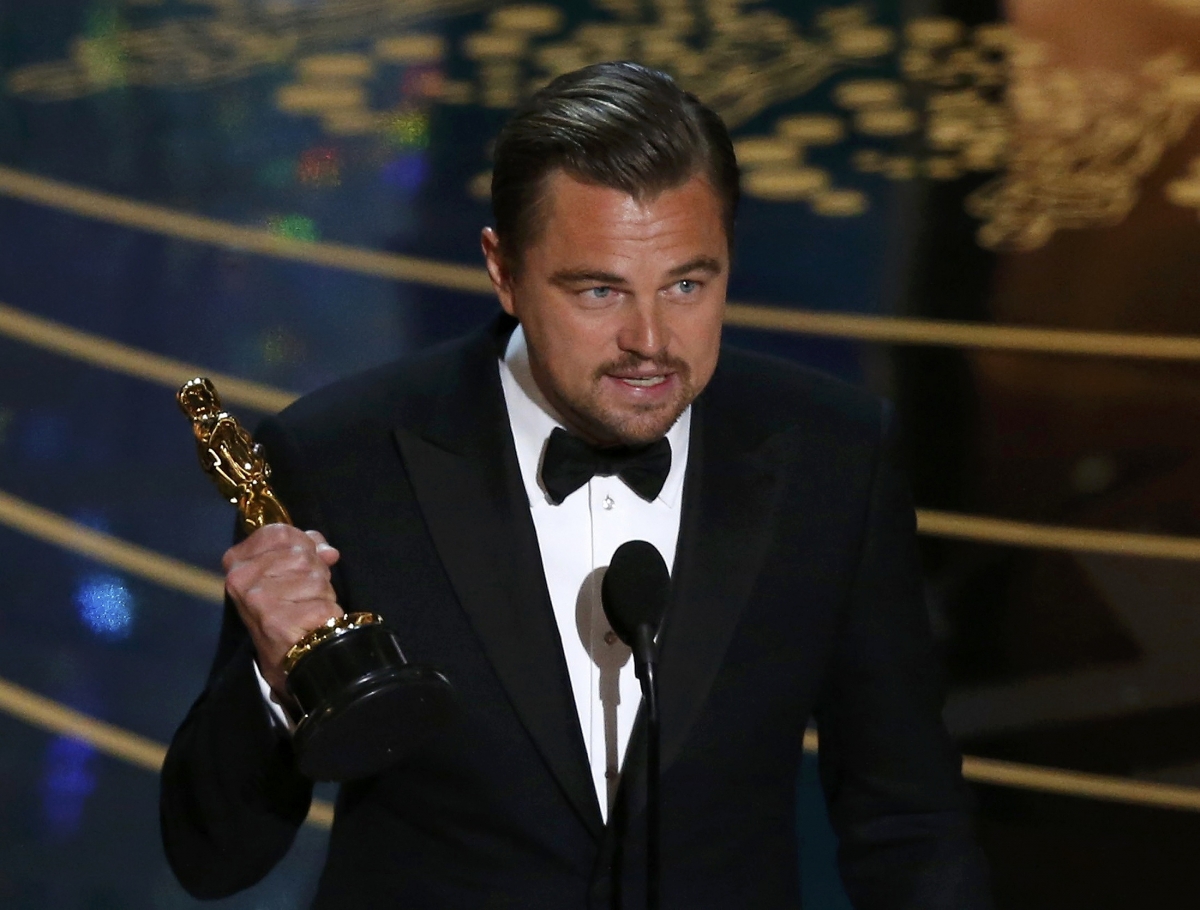
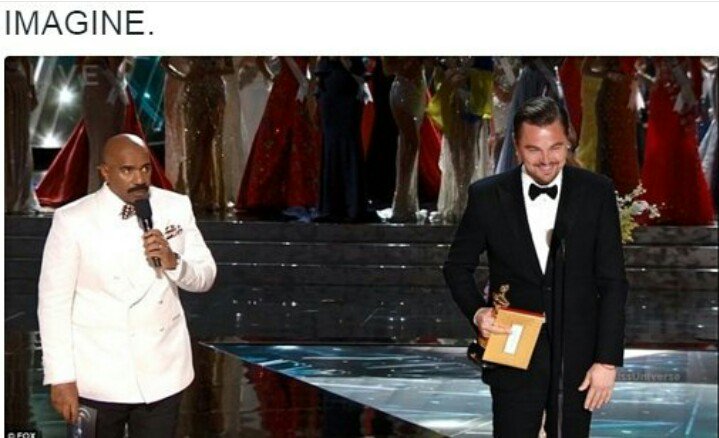
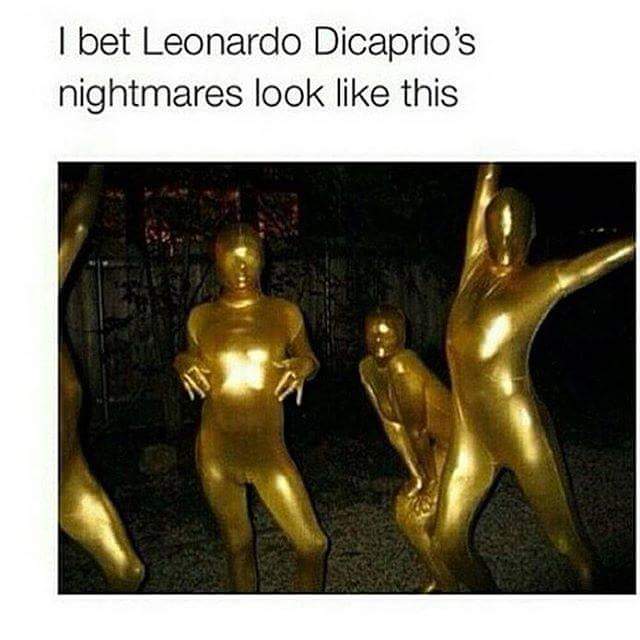
The Best Leonardo DiCaprio Memes


After the long overdue Oscar that Leonardo DiCaprio received at the 88th Academy Awards this Sunday. We have also witnessed the death of the Leonardo DiCaprio Oscar memes. So here are a few of my favorite creations.
Rest in Peace Leo Memes


Eddie The Eagle - Movie Review


It’s not to be taken too seriously, but Eddie The Eagle definitely succeeds as a silly, entertaining underdog story.

From Bad News Bears to Cool Runnings to The Mighty Ducks, it’s hard not to love an underdog sports story. Sure, they can occasionally be formulaic and predictable, but there’s always pleasure in cheering for David in a fight against Goliath, and there’s always tremendous potential for fun character work in like-minded films. It’s become a great cinematic tradition, and it’s one that director Dexter Fletcher’s Eddie The Eagle falls right in line with, mixing kooky period style with a ridiculous and fantastic tale of true passion and fortitude.

Inspired by the feel-good true story that emerged from the 1988 Winter Olympics, the film stars Taron Egerton as Eddie Edwards: an awkward young Englishman who, despite being largely uncoordinated and unskilled, wishes to do nothing in his life other than compete for a medal in the Olympic Games. Throughout his youth, he constantly searches for the sport in which he can actually compete – and has a revelation when he discovers the art of ski jumping (a sport that Great Britain hadn’t competed in for decades).

Leaving his entire world behind, Eddie travels to Germany to learn at an elite ski jumping training center – but being as old as he is, he’s constantly mocked and told that he doesn’t have a chance. That is, until he catches the eye of an American, retired, and consistently drunk former ski lumping champion named Bronson Peary (Hugh Jackman), who begrudgingly agrees to take Eddie under his wing and teach him how to compete on the global level.

Admittedly, from that plot description, you can probably predict each beat of Eddie The Eagle as it plays out, but what the film lacks in big surprises it makes up in miles of heart and really perfect style. It’s clear that Dexter Fletcher knew exactly what kind of movie he was making going into the project, as it functions as a wonderful throwback to the era of classic underdog sports movies – complete with a rich, synth-filled score from Matthew Margeson that simultaneously keeps you pumped for the action while winking at the silliness of its subject matter. You’ll run out of fingers and toes trying to count the number of overused sports-movie tropes that find their way into the story, but because it’s done with such knowing flair instead of sheer laziness, it all feels strangely refreshing and fun, instead of laborious.

It’s worth mentioning that the film also takes many liberties with the story of Eddie Edwards – to the point where most of the movie is basically fictionalized – but in this day and age, that tactic actually feels worth applauding. Cinemas are regularly filled with by-the-book biopics that have no interest in straying from the details of the true story (possibly due to fears of inaccuracy claims), but Eddie The Eagle rather brazenly defies this approach and fabricates some rather huge parts of the story (such as the existence of fictional coach Bronson Peary, for starters). While some may admonish the film for this fact, it’s actually really great to see filmmakers (including Dexter Fletcher, in addition to screenwriters Sean Macaulay and Simon Kelton) who understand the line between emotional truth and factual truth, and use it to their advantage by making a more compelling story from the source material. Eddie The Eagle might not get everything completely right, but there’s also no denying that the movie is a great reflection and representation of its central figure.

Of course, a lot of that spirit comes from the actual portrayal of Eddie, and in playing a role that is a complete 180-degree turn from his breakout performance in last year’s Kingsman: The Secret Service, Taron Egerton not only demonstrates great range, but also some very abnormal and fascinating charisma. Sporting a pair of glasses that take over half his face, and a prominent under bite that makes him look consistently confused, Eddie is an awkward guy and unconventional protagonist, but Egerton really makes you care about his success simply by selling his extreme passion and unwillingness to be put down by all the “No’s” that he has heard throughout his life. Add in the great chemistry that he shares with Hugh Jackman (who puts in a fun, engaging performance of his own), and you realize that Eddie The Eagle will be one of the films we look back on with extreme fondness as Egerton rises to greater prominence in the industry.

Looking back, the 1990s was a great era for family sports movies - with the release of not just the aforementioned Cool Runnings and The Mighty Ducks, but also The Sandlot, Rudy, and more – and Eddie The Eagle feels more in tradition with those films than anything we’ve seen in a while. It’s not to be taken too seriously, but it definitely succeeds as a silly, entertaining underdog story, so understand that going in, and you will have fun.

Alien: Covenant and The Predator Get New Release Dates


Alien V Predator: Requiem poster (crop)
Not to be distracted by the small matter of the Oscars this weekend, studio Fox have been doing a spot of release-date reshuffling. And while the news is muted for X-Men spin-off Gambit, it's more positive for the return of two monster franchises. Alien: Covenant will now be with us sooner than we thought, while The Predator now has a firm date for his unleashing.

Unlike its predecssor Prometheus, which came out in December of 2012, Fox have now staked Ridley Scott's Alien: Covenant as a full-on summer tentpole, picthing it on August 4, 2017. That shows a good deal of confidence on Fox's part that a "proper" new Alien after the curveball of Prometheus is a big thing indeed. It also gets it safely out of the way of Star Wars: Episode VIII, with its only direct competition on its new date currently Pitch Perfect 3 and Blazing Samurai.

Shane Black's The Predator, meanwhile, opens on March 2, 2018, likely more-or-less kicking off that year's "summer" blockbuster season. It currently shares its slot with an as-yet unnamed Warner Bros. big-hitter: probably a DC superhero movie; possibly the Ezra Miller- starring The Flash (Aquaman is slated for July the same year).

Fox has also shifted Tim Burton's Miss Peregrine's Home For Peculiars out of its packed December slot into a quieter berth on September 30 this year. Avoiding Rogue One and Assassin's Creed, it'll now face Peter Berg's oil rig disaster movie Deepwater Horizon.

Alien: Covenant stars Katherine Waterston, Michael Fassbender, Demián Bichir, Jussie Smollett, Carmen Ejogo and Danny McBride. It's set ten years after Prometheus, has proper Aliens in it, and has been confirmed by Ridley Scott as aiming for an R-rating: itself significant for an August blockbuster.

Miss Peregrine’s Home For Peculiars is adapted by Jane Goldman from Ransom Riggs’ novel, and finds Hugo’s Asa Butterfield discovering the ruined gothic institution once run by Eva Green. Samuel L. Jackson, Judi Dench and Allison Janney are some of the inmates who never left...

And we don't know much about The Predator yet, but we're very excited.

Wednesday, 10 February 2016

Indie Film News - 10th February 2016

Dark Dignity

Displaying Cast IvonaWillaFrig Photo - small for Twitter.jpg
Dark Dignity is the story of the women of a nomadic tribe, searching for a new home five years after the world crumbled. Civilization as we know it is gone due to The Infected that plagued North America and beyond.
This diverse mix of former suburbanites – teachers, doctors, police officers – must always be prepared to fight for survival in the badlands of rural landscapes and desert vistas. The dangers hiding behind every shadow may be thieves or gangs… or perhaps creatures once human and now forever changed.


A Legacy of Whining
The ghosts of both past and present collide as two former high school friends reunite after thirty years and embark on a darkly humorous nocturnal fever dream of a journey where old emotions and resentments bubble to the surface once again. Written by Ross Munro
I have been granted an exclusive online viewing of this movie so that I can review it, the review will be up withing the next day or so.


Street Shots
Go check out my friend's blog "Street Shots". Posts are about photography, skating, street culture etc.


Twitter - @StreetShots_ds
Displaying #ALegacyofWhining_Bordello13.JPG

Monday, 8 February 2016

Hail, Caesar! - Movie Review

If self-plagiarism were a criminal offence, the Coen brothers would be facing a long stretch in San Quentin.

Hail, Caesar! shares the Hollywood-studio setting of Barton Fink, and, no doubt to the delight of Coenverse theorists everywhere, the exact-same fictional studio: Capitol Pictures (they’ve come a long way from Wallace Beery wrestling flicks). Its plot, such as it is, hangs loosely on a kidnapping hook, just like The Big Lebowski, whose Busby Berkeley dream sequence also finds good company in Hail, Caesar!’s elaborate musical numbers. It’s slathered with the ’50s period sheen of The Hudsucker Proxy, tussles with similar existential issues to A Serious Man, and gathers a sprawling ensemble of big names in character-actor roles, as Burn After Reading did. There is an ill-fated suitcase full of money, a shouty fat man, a little yapping dog, philosophical monologues from an eccentric white-hair, and George Clooney mugging.

Though it’s not really Clooney’s film. As kidnapped matinée idol Baird Whitlock, another George-shaped Coen creation who’s two steps behind the rest of the room, he is merely their MacGuffin; like the baby inRaising Arizona, only not as smart and a touch more helpless. It’s Josh Brolin as Capitol’s Head Of Physical Production, Eddie Mannix, who drives things — albeit not always using the most direct route.

Mannix, the closest thing this movie has to a main character, is another of the Coens’ serious men. A fixer for the studio, there’s a little of Tom Regan from Miller’s Crossingabout him, though he’s armed with petty cash rather than a pistol. He will do something as objectionable as slapping an actress for taking part in an unsanctioned photo-session, but is also wracked with Catholic guilt over lying to his wife about quitting smoking. And there’s a greater temptation than tobacco: a big-time job offer from aerospace company Lockheed. “Aviation is serious,” he’s told. “You won’t be shouldering a load of crackpot problems.” But Mannix — played by Brolin as a charming bruiser who’s not quite as unflappable as he’d like people to think — thrives on the crackpot problems.

Of which Whitlock’s disappearance is but one. There’s also the matter of cherub-faced B-Western star Hobie Doyle (Alden Ehrenreich) being roped into a pristine, drawing-room drama, to the despair of its mannered English director, Laurence Laurentz (Ralph Fiennes). Then there’s the Esther Williams-ish mermaid (Scarlett Johansson), facing the scandal of being both pregnant and unmarried. Plus, rival twin-sister entertainment columnists Thora and Thessaly Thacker (Tilda Swinton, tasked with basically playing a double Hedda Hopper who’s at war with herself) are on Eddie’s back, too.

This is the Dream Factory operating at maximum productivity, and Joel and Ethan revel in the absurdities of the studio system, whereby directors can’t pick their stars, and stars have to change their image at the wag of a fat finger and date who they’re damn well told. On the one hand, the brothers are snickering at the silliness of how things used to be, but on the other they are celebrating this bygone Golden Age. Because, beyond all the trademarks, gags and Georgian gurning, whatHail, Caesar! essentially amounts to is a series of impressively mounted pastiches.

There’s the Johansson-centred synchronised-swimming sequence, featuring a giant, mechanical whale. There’s a full-on, astonishingly inventive song ’n’ dance number featuring a tap-dancing Channing Tatum and a bunch of sailor-boys lamenting that “We Ain’t Gonna See No Dames”. There’s cowboy Doyle’s latest picture, a twee Western named Lazy Ol’ Moon, complete with a cantankerous prospector-type. And there’s Hail, Caesar! itself, which glows convincingly with all the grandeur and pomposity of a true, old-school Hollywood epic. In each case, the Coens’ A-crew (including Mary Zophres on costumes, Roger Deakins as DP and Carter Burwell scoring) nail the genre perfectly. It’s an astonishing technical achievement.

Where Hail, Caesar! falters, though, is in the glue that binds all these elaborate sketches. Mannix’s travails don’t entwine satisfactorily, and while the flourishes are fantastic, none really move the story forward. It’s clear the Coens aren’t interested in sustaining the sense of mystery at who exactly has starnapped Whitlock, so it’s hard for the audience to care either when the big reveal hits. And, as good as Brolin is, the character lacks the culty appeal of, say, The Dude in The Big Lebowski, whose shambolic nature matched that film’s saggy, shaggy storytelling. It’s not like the film is hollow — hidden at its heart, in fact, is a struggle for the soul of Hollywood — it’s just that it feels more like a series of pleasant diversions rather than a single, solid journey.

That said, if you’re a committed Coenophile (as we all should be, right?), you’re unlikely to be too bothered by all this. Likely to fry the mind of anyone who hasn’t yet built up a resistance to the brothers’ foibles and predilections over the past 16 films, it’s easily the most Coen-y Coen movie they’ve put out. But then, they are stealing from the best.

Point Break - Movie Review

Takes the outline of the original and translates it for an audience that has chugged 15 Monster Energy drinks and stayed up for a week mainlining Dude Perfect videos.

“If a tree falls in the forest and no one puts it on YouTube, did it really happen?”

This is an actual line of dialogue, delivered with total sincerity, from Ericson Core’s remake of Kathryn Bigelow’s Point Break. It’s one of several dumb “wisdoms” suggested by a screenplay that’s littered with bubblegum philosophy. But if you’re OK with the pseudo-Zen sentimentality of the insta-upload message in that statement, then the shallowness of this derivative and unnecessary reboot might not bother you as much as it did me. The original Point Break wasn’t Shakespeare, by any means. But it was never insultingly stupid. This is.

Core’s Point Break essentially takes the outline of the 1991 genre thriller starring Keanu Reeves and Patrick Swayze, but translates it for an audience that has chugged 15 Monster Energy drinks and stayed up for a week mainlining Dude Perfect videos. In the process, Core misunderstands everything that was important to the original film, believing that ramping up the “EXTREME” at every turn will lead to a more rewarding experience. It isn’t. It’s exhausting. Remember the exciting skydiving sequence in the original? This time out, you are going to get large-scale skydiving, surfing and motorcross stunts in the first 15 minutes! But the skydiving sequence from the first movie mattered because by the time it arrived, you cared about the characters involved in the stunt. The new Point Break people have as much depth as actors in a Mountain Dew ad.

Right off the bat, Point Break 2015 makes a fundamental error in setting up Johnny “Utah” (Utah is a nickname this time out, which makes no sense). Keanu Reeves’ version of the character in 1991 was a former athlete but a clean-cut and dedicated FBI agent who reluctantly joined a group of surfers suspected of robbing banks wearing masks of dead Presidents. (The crooks wear similar masks in one scene of the reboot, and never again, because the remake doesn’t get why that gimmick was important.) When Reeves’ Utah gets pulled into the wake of Patrick Swayze’s Bodhi, it goes against everything that Utah stands for, setting up an internal conflict that transcended the impressive stunts.

Point Break 2015 paints “Utah” (Luke Bracey) as a former extreme-sports addict who recognizes the actions of Bodhi (Edgar Ramirez) and his crew because they behave the way that he one did. No internal conflict. No stakes in the game. It’s strange, too, how after one criminal mission at the start of the movie, Bodhi and his team of elite athletes stop committing crimes (hence, the lack of presidential masks) and really don’t create any conflict that would need the FBI… taking the wind out of the movie’s sails. We’re left with new versions of Bodhi and Utah, and the comparisons between the original and the remake – which are inevitable when reviewing this movie – show how wrong this remake is. Swayze’s Bodhi was a charismatic Zen flame drawing Keanu’s moth. Ramirez’s Bodhi belongs more to the tattoo-and-leather Euro-trash category of extreme-stunt seekers. There’s far less appeal – to both him, and to the movie.

Is Point Break 2015 bigger than the original? Yep. Where Kathryn Bigelow limited her action to the sleepy beach communities of Southern California (for the most part), Core’s Point Break is a global affair that has “Utah” chasing Bodhi to the far-reaches of the Earth to stop him from… well, again, he’s not really committing any crimes, so I’m not surewhy the FBI is so hellbent on bringing Bodhi to justice. The members of Bodhi’s gang are interchangeable and forgettable. Teresa Palmer has a painfully thankless role as the Mother Hen of the gang, cooking meals for The Boys after they complete their missions, and sleeping with “Utah” because the script thinks it needs an emotional conflict. Does bigger mean better? Nope. Because really, how often does “bigger” equal “better” when it comes to Hollywood remakes?

“Let’s just be here.” That’s another pearl of wisdom spoken by a serene criminal in Point Break 2015. When you are at the movie deciding what to see, however, you should just be anywhere else.

Wednesday, 3 February 2016

Star Wars Rogue One News - Boba Fett

We caution you that the following is all speculation, but it's intriguing. Design and manufacturing lead times often mean that toy companies unwittingly reveal a potential spoiler or two. In this case it's Lego who've set the womp rat among the banthas with an image of a ship in its Rogue One: A Star Wars Story range that has all sorts of implications. Leave now if you don't want to know, before you look too closely at this tweet.
Star Wars Lego at Nuremberg toy fair
Still here? So yes, that image above the words "Rogue 1 Oktober" (it's a toy fair in Nuremberg) - spotted by Twitterer @StudShooter - looks very much like Slave 1, the iconically odd craft belonging to Boba Fett. Does that mean the cult-favourite bounty hunter will be making an appearance? There have been rumours before about the second of the non-numbered Star Wars "anthology" films - following Rogue Onein 2018 - centring on Fett. Is this just a fly-past cameo teasing that? Or is it simply some other modified Firespray-31-class patrol and attack vehicle? Can't be too many of them in the system...

Some rumours that have already surfaced even peg Felicity Jones' character as Fett's daughter. We couldn't possibly comment - except to say that if everyone in the revivified Star Wars turns out to be the kid of a legacy character, it's getting to be a small bloody universe.

Gareth Edwards finished cranking his cameras on Rogue One: A Star Wars Story at the end of last year, with the post-production process now well underway. The story of how the rebel pilots stole the original Death Star plans arrives in UK cinemas on December 16.

Tuesday, 2 February 2016

The Birth of a Nation - Movie Review - Sundance 2016

16612-3-11001
For film historians, the audacity of Nate Parker's Nat Turner biopic begins with the title: The Birth of a Nation. It shares its name with D.W. Griffith's century-old ode to the creation of the Ku Klux Klan — which, like Leni Riefenstahl's Nazi propaganda, is too innovative for its time to completely ignore, at least from an academic point of view.

But Parker beats Griffith at his own game. His take on the largest slave rebellion on American soil, which Parker directed and wrote as well as starred in, may be a little choppy, but it's also a remarkable and important teaching tool.

The story begins in Southampton County, Virginia, where young Nat, a slave on the Turner plantation, is adored by his parents and grandparents, who believe he will grow to a special purpose. As far as these things go, the Turners are “good” slavers who refrain from doling out brutal punishment and even aid young Nat by teaching him to read.

The Mistress of the house offers Nat Bible lessons (no other books, she says; those are only for whites), and he grows to become a preacher. Nat's sermons gain attention, and soon his master Samuel Turner (Armie Hammer) is essentially pimping him out to other plantations, hoping that hearing the Word of God from a fellow slave will have a quieting effect.

But seeing the enormity of slavery — especially when it takes a more demonstratively brutal form on other plantations — begins to open Nat's eyes. It's increasingly difficult for him to reconcile the Gospels with the reality around him.

As calamities befall people close to him (his wife is raped and beaten by a group of slave catchers that harassed his father), Nat decides that armed insurrection is actually his true calling.

The Birth of a Nation's most effective moments come in sequences that show the total madness of the antebellum South. The auction scenes are nauseating; even so-called “nice” whites gifting human beings to one another is almost too shocking to contemplate.

Unfortunately, Parker's style is extremely conventional in much of the film's plotting. Too often, the dialogue is on the nose, and some dreamlike images don't seem underpinned by much else in the film.

When the violence finally comes, it happens abruptly. Turner's change from a preacher to guerrilla isn't very smooth, and the independent film's low budget doesn't do the action sequences any favors.

Still: Nat Turner is, for many, just a few paragraphs in a history book. He's an important figure who reflected sentiment prior to the Civil War, but also killed a lot of random white people. Who needs to think about whether he was a hero or a crazy person; let's turn the page.

The Birth of a Nation takes a deeper dive into a man too often relegated to footnote status. The film suggests that, no, there weren't any “good whites” so long as they were enjoying an economic advantage derived from exploiting slaves. Maybe the wives of the slavers didn't “ask” to be put there, but neither did the descendants of those stolen from Africa.

It's a thorny topic, and still a relevant one; no, America hasn't solved its “race issue.” Stories like these must be told, not buried — and while this movie isn't a masterpiece (it has little of the cinematic grace and emotional resonance of Steve McQueen's 12 Years a Slave, for example), it is absolutely one of 2016's must-see films.
Birth of a Nation

Friday, 29 January 2016

Swiss Army Man - Movie Review - Sundance 2016

Swiss Army Man Featured
"Swiss Army Man" is a comedic action-drama that stars Paul Dano as a lonely guy who, while sailing one day, gets swept up in a storm in the Pacific Ocean and is washed ashore on a deserted island. Daniel Radcliffe is the dead body that washes up at the moment when Dano's character, Hank, is about to commit suicide.

We're not even close to the weird part yet.

Directed by Daniels (Dan Kwan and Daniel Scheinert), who are best known for their music videos and commercial work, the duo have created for their feature-length debut a movie that highlights what it's like to be a recluse and not taking chances in life — a topic not uncommon to Sundance Film Festival entrants. The story plays out in a fashion that's funny, touching, but most importantly, original.

Let's take the film's opening 10 minutes, for example.

After he comes across the dead body, Hank gives this touching speech on how his hopes have been dashed that it isn't a live person. He's lonely, and desperate for human contact. But as he opens up in this revealing moment, the dead body passes gas.

It's funny; Hank even finds it amusing, but the body does it again. Even as Hank prepares to try suicide again, the body continues to pass gas.

The body then gets pulled into the current and moves further into the water — because of its relentless flatulence. Eventually, Hank sits on top of the body and floats it like a jet ski off the island. The film score is triumphant. Hank is cheering as he moves further away from the island. Is this all a dream?

That's a question you'll be asking yourself often as the body doesn't just use its biological function to help Hank out of his predicament, but as Hank continues to search for civilization the body turns into a multipurpose tool. The body chops wood with its arms, can start fires with its fingers, is a source of hydration by spewing water from its mouth — which Hank drinks.

Importantly, over time, the dead body begins to talk. Manny (the body's name) is curious about everything and Hank is happy to have someone to share his life with. Hank talks about what he wants to do when he returns home to reunite with his love, Sarah (Mary Elizabeth Winstead).

Hank and Manny build little moments from Hank's memory with sticks, brush, and trash found in the woods. But there are moments where Hank is too shy to go through with talking to Sarah, and tries to make Manny understand that doing almost anything instinctively will make a person look weird. "Swiss Army Man" is a look into the side of ourselves that's too weird to be revealed in public. But, what the Daniels show here, is that the eccentricities in us that we hide may, in fact, be the best version of ourselves. The Daniels just chose to drive home that point by creating a silly film with A-listers in it.

And that's the best part of this movie. Because the Daniels were able to land top-shelf talent like Dano and Radcliffe in their gonzo movie, it makes your chances of seeing "Swiss Army Man" outside of the film-festival circuit that much greater. So get ready.

Wednesday, 27 January 2016

Star Wars Rogue One News - Darth Vader, Stormtroopers and More!

The Star Wars franchise returned to the big screen with Star Wars: Episode VII – The Force Awakens in December 2015, and that film was only the beginning. Disney and Lucasfilm have grand plans for the galaxy far, far away, taking the movie series beyond the traditional Skywalker saga with standalone anthology projects. The first of these, Rogue One: A Star Wars Story, hits theaters this holiday season and focuses on the team of Rebels who stole the plans for the original Death Star.

With the hype surrounding The Force Awakens starting to cool down, attention will be shifting towards Rogue One, especially on the ever active Star Wars rumor mill. Keeping that in mind, fans should be eager to check out a new report that provides alleged details on the various new characters Rogue One will introduce, as well as one returning Dark Lord of the Sith.

JoBlo has an exclusive scoop covering information about the initial Star Wars spinoff. There’s nothing too juicy in their rundown (i.e. crucial plot twists), so those concerned about spoiling the experience don’t have much to worry about. Their findings are presented in a bullet list below:
The film will feature stormtroopers that wear all-black armor called Death Troopers, seemingly taking a cue from the Shadow Troopers of the now defunct Star Wars Legends series.
There’s a new droid character that works with the Rebels, and he’s a “scene stealer”
One of the main characters is named “Cashen,” but it’s unknown which actor is playing him/her
A new TIE Fighter design and AT-ATs will be shown in Rogue One
Darth Vader is in the movie, and he has a “larger role than originally thought”

The report elaborates that the new droid was originally an Imperial robot that gets reprogrammed to aid the Rebels. As for his appearance, he has long arms, two legs, and is dark grey or black in color. The character is described as being a change-of-pace from the normal protocol droid design fans are familiar with (C-3PO). JoBlo is speculating that this could be Alan Tudyk’s motion-capture role, but there’s nothing to confirm or deny that so far. It’s a logical guess, since it sounds like the technology would be necessary to bring this particular character to life. Time will tell, but after Lucasfilm won fans over with scene stealing BB-8, it isn’t surprising that they’ve apparently created another droid poised to be an instant fan-favorite.

As for Darth Vader, it’s difficult to say what exactly JoBlo means when discussing his part in the film, since it’s never been stated how much screen time the villain will receive. From the wording, it sounds like Vader will be one of the central antagonists of the film, making life miserable for Felicity Jones’ character and her team. If Vader were to have a primary role in Rogue One, it would be a smart move on Lucasfilm’s part. Nostalgia was used to great effect in the Force Awakens marketing campaign. Since Rogue One takes place before the original trilogy heroes even met, their options are limited when playing that card for the spinoff. Placing a recognizable character like Vader front and center is almost a necessity when promoting Rogue One, as that would help sell casual audiences on a Star Wars movie disconnected from the main story line. His appearance is a huge selling point.

The other items from the scoop are not so instrumental to the overall story, but do show how director Gareth Edwards will be making his film differentiate from what came before. The revelation of the Death Trooper brings to mind a behind-the-scenes image Rogue One star Donnie Yen shared, which showcased a black helmet that hadn’t been seen in a previous Star Wars movie. Not only would a new stormtrooper outfit (along with a TIE Fighter redesign) give Rogue One something unique to call its own, it would also give Disney more merchandising opportunities when it comes time to launch all the Rogue One tie-in materials. As for why they’

Tuesday, 26 January 2016

Exclusive Revenant Behind the Scenes Documentary

Mind blowing western from the visionary director Alejandro González Iñárritu. The Revenant has turned the heads of everyone, and I would go as far as saying it's the biggest advancement in cinematography that we've seen in the past 16 years.
Whilst feasting my eyes on The Revenant the biggest question I kept asking myself all the way through the movie was how the heck did they manage to pull off all of those incredible shots. And thankfully my questions have been answered by this intriguing 45 minute Behind the Scenes documentary answers all of my questions and showcases all of the incredible work that went into creating this blockbuster.
If you're a hardcore movie fan like me, or even just a casual viewer then this documentary will blow your mind, highly recommend watching this.

Here's the link to the video - The Revenant | "A World Unseen" Documentary

Batman V Superman News : Empire Magazine


With only 2 months left until the massively anticipated Batman V Superman movie, Empire Magazine is jumping on the hype wagon and help build the excitement for the movie.
We finally get to see our two favourite superheroes clash in possibly the most thrilling superhero film that we've seen come out of Hollywood. Empire magazine put it in the most perfect of words "History's two greatest superheroes face off in Batman V Superman: Dawn of Justice".

Here are the two Batman V Superman covers, also featuring articles about Star Wars Episode 8, Trainspotting, The Coen Brothers and The Walking Dead.
batman empire coverSuperman cover

Friday, 22 January 2016

Sundance Film Festival - "Other People" brings audiences to tears

Molly Shannon is best known for her outrageous “Saturday Night Live” impersonations, but the woman behind Mary Catherine Gallagher impressed Sundance Film Festival audiences with her subtle, serious turn as a woman struggling with terminal cancer in “Other People.”

The film, dramedy about a gay man (Jesse Plemons) who moves home to Sacramento to take care of his mother (Shannon), kicked off the 32nd edition of the Park City, Utah festival.

As the credits rolled on the film, loud sobs echoed across the Eccles Theater, as many members of the crowd stood and cheered for first-time director (and “SNL” writer) Chris Kelly as well as his cast—including Bradley Whitford and Maude Apatow—and producers Adam Scott and Naomi Scott.

Kelly revealed that the story was mostly autobiographical. “This is sort based on my life,” he said. “When trying to cast this movie, I wanted funny people. That’s what I remember—death isn’t just sad all the time.”

He noted that there are humorous moments even when watching a loved one grapple with a debilitating illness.

“There’d be this horrible, sad, depressing experience and then my mom would be like, ‘I just got done trying medical marijuana,” said Kelly.

Shannon drew the loudest applause as she took the stage and the buzz in Park City is that the actress could get some awards attention if the right distributor picks up the film. During the audience Q&A, Shannon talked about how she started her career as a dramatic actress studying at NYU, and had to catch her breath after reading the script. “It’s just so touching when someone pulls straight from his heart,” she said.

A stream of older audience members left mid-way through the film, perhaps because of its frank depiction of sex between two men, but part of “Other People’s” charm is that it’s the rare movie that features gay characters as three-dimensional figures. Plemons character David is unable to connect with a father (Bradley Whitford) who refuses to accept that his son is gay.

“This is as much about loss as it was acceptance,” said Plemons.

Another scene-stealing performance is from 14-year-old J.J. Totah, who plays the flamboyant younger brother of one of David’s hometown friends and stages a drag dance show for his neighbors. Totah said he helped developed the character with Kelly, including his character’s obsession with carrara marble. “My character is unique and comfortable with himself,” he said, when an audience member noted he’d never seen anything like him in a movie before. “Use color and paint a picture, honey. That’s what we should all do.”

Thursday, 21 January 2016

Deadpool - Movie Review

Deadpool Empire Magazine Deadpool Fan Event Screening Reactions & Early Review
Deadpool is definitely a superhero that the general public will not know. Technically Deadpool is an antihero but then again, he is kind of in his own league as there really isn’t any other character that is similar to him. Instead of me talking about how much I love his character I will restrict myself to the movie, in order to keep this review at a reasonable length. If you want to know more about him then you may want to do a bit of a Google.

Firstly this is not a normal comic book movie. The movie wants you to believe that anyway.

For one it's rated R, as a movie like this should be). Just like his comic book counterpart, Deadpool is very Meta (you might want to look that up) and makes various references to pop culture, especially films. For a diehard movie fan like me, the references are very funny, and it’s cool to see the movie make fun of its series' and actors' past failures *cough* X-men Origins, Wolverine and Green Lantern *cough*.

With that in mind I do have to bring up that, yes, Deadpool has been in an X-men movie before, played by the same actor, but we do not speak of that movie. But on that note, I’m so happy Ryan Reynolds reprised his role as ‘the merc with a mouth’. He has now joined the group of a few actors who are the only ones that we can see playing their respected heroes i.e. Hugh Jackman as Wolverine and Robert Downey Jr as Iron Man. He fits the Deadpool persona perfectly, and he carries the entire movie. Reynolds is a joy to watch, and has many hilarious moments in the film. But that isn’t to say he is the only good character in the movie.

The supporting cast is great and they all play along to Deadpool’s interesting personality. T. J. Miller as always makes you laugh and even characters you don’t see much, like a bloody taxi driver, are great additions to the movie. I can’t leave out the two guest X-men, Colossus and Negasonic Teenage Warhead, who add a kind of balance to the film, while also helping to get the message across that this isn’t a regular comic book movie.

The movie does a great job at balancing the comedy with the serious moments. It knows when it to tone down the funny and when it doesn’t have to. There are a lot of movies that do not know how to balance the two. There were some heartfelt moments in the film, which I was pleasantly surprised by.

Now we get down to the stuff that may factor in to whether you will enjoy this movie, for my family especially.

As an R-rated movie, Deadpool does not shy away from violence and blood. Every action scene has its fair share of bone, breaking, sword stabbing and blood squirting. It’s not excessive “this is Sparta” 300 level amounts, but it is definitely present.

Also the jokes. There is an array of genitalia and sex jokes and certain actions that are scattered frfequently throughout the film. I found them all hilarious, but some perhaps older people (sorry dad but I’m calling you out) just can’t stand that kind of entertainment. But people like what they like, I’m not judging anyone.

As funny as this movie was, the story was basic: guy tortures and experiments hero, hero breaks free, hero wants revenge on guy.

So people wanting something different plot wise will be sadly disappointed. That being said, the story works for this film, as it isn’t the centrepoint and it is Deadpool himself that makes up for the lack of plot depth.

Something I do have to give the film props for though is scaling down the scope of the film. It has been getting a bit tiring seeing mass ensembles of superheroes blow up the world time and time again, so it is a breath of fresh air to have a ‘small’ film, if you know what I mean, especially before we get into one of the most hectic years in comic book movie history.

A similar thing can be said for the villain, who is a bit shallow, and doesn’t really do anything that threatens anybody.

But he makes up for that with character. He really gets into what he is doing, and it looks like he is having a great time. He is nothing special, so don’t expect a Loki or a Wilson Fisk.

After years and years of waiting the fans have finally been given the Deadpool movie we deserve. The film nails Deadpool in spades and it was really surprising given that this was a first-time director. Did I mention that this was the director’s first film? Shout out to Tim Miller.

It balances all the funny and the fourth wall breaking really well with the tension and the serious stuff. The movie may not be for everyone, due to its very obvious R rating, but the movie would probably be bad without that big fat R.

Thank you especially to Ryan Reynolds who nailed the character. I love you man. Everyone who is old enough to see it should go, and don’t take your kids.

Note: The opening credits are probably the best opening credits ever. Of all time.

Wednesday, 20 January 2016

Brand New Suicide Squad Trailer!

The long awaited trailer for the upcoming Suicide Squad movie has finally dropped and it did not disappoint, it's really set the mood of the black comedy super villain flick.
Some great shots of the actors in action including Will Smith, Jared Leto and Margot Robbie all nailing their iconic super villain roles. DC have really stepped up their game and are finally giving the Marvel Cinematic Universe a movie style beating.

Watch the trailer here - Suicide Squad Trailer!