Showing posts with label new movie. Show all posts

Wednesday, 14 December 2016

Rogue One: A Star Wars Story - Spoiler Free Review

The narrative of Rogue One is sufficiently simple to explain. We join a group of dissidents as they look for plans that will eventually help Luke Skywalker destroy the Death Star. Rogue One is more than just a prequel. It works both as a standalone film and as a form of fleshing out the existing Star Wars franchise.

Let’s answer the question anyway. Such rare creatures will find something like a self-contained narrative. The movie opens with Orson Krennic (Ben Mendelsohn), a director of weapons research for the Empire, arriving with the eagerly anticipated "Death Troopers" at the home of martial engineer Galen Erso (Mads Mikkelsen). The Star Wars films have always had clear samurai and Wild West influences. The opening tends more to a Western than Kurosawa as Krennic drags Galen off while Jyn Erso, the captive’s daughter, watches terrified from nearby rushes.

Jyn is rescued by a muttering Saw Gerrera (Forest Whitaker) and spirited away to the life of a mildly criminal nomad. Galen Erso is forced into designing the Death Star, but he has not turned to evil.  Jyn Erso falls in with a gang of hooligans who, in defiance of Rebel command, set out to locate the plans Luke will one day require.

Star Wars fanatics needing commentary on and references to the wider canon will not be disappointed. Minding the current hysteria about spoilers, I will be no more specific, but we can safely praise the computer boffins for two creations that, even in this time of digital wonders, fairly take the breath away. Laamu Atoll in the Maldives provides a beautiful closing location that looks to have been peeled spectacularly from the cover of a golden-era science-fiction paperback.

K-2SO, the franchise’s latest robot, voiced elegantly by Alan Tudyk, is so charmingly lugubrious – part Iron Giant; part Marvin the Paranoid Android – that one can’t help but yearn for a reboot somewhere else in the universe.

Rogue One’s greatest selling point is, however, an old-fashioned, 21st-century human. Felicity Jones is endlessly charming and spirited as the grown Jyn Erso: a brigand who can’t sustain the amoral pose. Jones’s achievement is all the more remarkable given the blandness of the dialogue.

Other members of Jyn’s posse struggle to establish any sort of personalities. The great Donnie Yen is there. The equally fine Jiang Wen is here. There is a lot of potential with the characters but they failed to succeed anything further than one dimensional personalities.

Happily, the final conflagration is sufficiently punchy to push thoughts of such underdevelopment from the mind. Gareth Edwards shoots that sequence in the style of a second World War battle. Almost to the same quality of Saving Private Ryan.

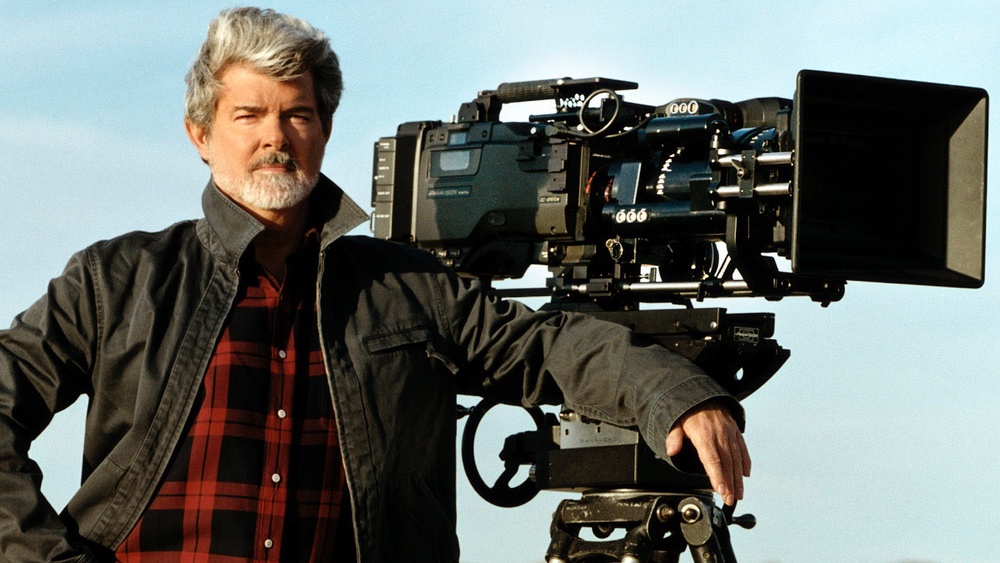
What does George Lucas Think of Rogue One?


Image result for george lucas movies
It has been recently confirmed that Star Wars creator George Lucas has watched a version of the upcoming Star Wars Anthology film "Rogue One". What does this mean for the film?

Last year "The Force Awakens" shattered the box office by becoming the third highest grossing film of all time according to Box Office Mojo. But even the commercial success cannot overshadow the criticism from fans and critics alike who argued that "The Force Awakens" was an updated version of the original Star Wars. But what does George Lucas himself think about Rogue One?

The original creator of the Star Wars universe apparently liked Rogue One more than Star Wars: The Force Awakens. Director of Rogue One, Gareth Edwards, said in an interview with io9 about his talk with George Lucas

“Two days ago, we got to show George the movie. We all had a phone call, and I got to speak with him yesterday, and I don’t want to put words into his mouth, but I can honestly say that I can die happy now. He really liked the movie, so it meant a lot. To be honest, and no offense to anyone here, it was the most important review to me… and I will take that conversation to the grave. It was a real privilege and his opinion means the world to me.”

Lucas was somewhat critical of The Force Awakens last year, a movie that devided fans and critics. So if Lucas likes it, does that mean Rogue One is even better than Episode VII? We’ll just have to wait a few more days to see.

What do you think this means for Rogue One? Will it be better than The Force Awakens? What Star Wars Anthology film would you like to see? Let me know what you think on Twitter. @TwmBurrows

Friday, 22 April 2016

The Missing Hand - Movie Review - Indie Film


The Missing Hand is the rare movie that succeeds on almost every level, where each character, scene, music, and joke firing on all cylinders to make a film worth watching over and over again. An excellent script written by Daniel Harding really drags the viewer into every scene and makes you question what you would do yourself if you was in the position of the characters.

In terms of the visual elements of the film, there really isn't much that needs to be said but perfection. A few of the shots have a very distinctive symmetrical style. The use of framing and focus really improves the overall viewing experience of the film and gives it a very professional aesthetic.

The first thing that really gripped me was the original score that was composed and orchastrated by Jack Blume, it really captures the mood and essense of the film. The music is full of suspense and mystery. It's a sound that even Ennio Moricone would be proud of.

Excellent performances from all the cast that really suits the dark comedy narrative. For me the most stand out performance was from Meryl Griffiths who really seemed comfortable in the role she was playing which lead for a very natural and overall great performance.

The directing from Daniel Harding is excellent, it really makes for a smooth flowing film from start to finish because your eye is always looking at something.

Overall I am incredibly impressed with The Missing Hand and it definitely exceeded my expectations by a couple of miles. I'm looking forward to seeing what the future holds for 231/2 Productions.

Tuesday, 12 April 2016

The Jungle Book 2016 - Movie Review

Jon Favreau's The Jungle Book isn't just a captivating adaptation of Rudyard Kipling's classic children's novel, but has forever changed the way CGI and real world settings will be integrated in film. There's no question about it: The Jungle Book is one of the most beautiful movies to come out of the studio in years. The attention to detail painted on every computer generated animal is impossible to ignore and the effect is a captivating experience like no other.

For the first time in a movie like this, which attempts to blend CGI elements with an actor and physical setting, the computer generated aspects of the film aren't distracting. After the first ten minutes or so, it doesn't even feel like there are CGI characters.

Paired with an A-list group of actors who are perfectly cast as the animals they're voicing, The Jungle Book is an enthralling, illuminating experience that not only pays tribute to a great story, but manages to make it that much better.

The Jungle Book follows the "human-cub" Mowgli (Neel Sethi), who has been living in the jungle among a pack of wolves since he was a toddler. He loves his life in the forested world, endlessly running through the open area with his pack brothers and sisters. Despite that, he can't help but feel a sense of not belonging to their world.

Still, that doesn't stop his pack leader Akela (Giancarlo Esposito) from taking him in and protecting him like he was one of their own. Things change, however, when the vicious tiger Shere Khan (Idris Elba) decides that it's time to kill Mowgli once and for all, leading to the boy's immediate departure from the clan.

Alongside his most trusted friend and protector, a leopard named Bagheera (Ben Kingsley), Mowgli travels deeper into the jungle than he ever has before, informed he must forever leave and live with other humans in the neighboring village. A home, he's informed, that he was supposed to have lived in his entire life.

During his journey, he encounters new friends (like the bear Baloo, voiced by Bill Murray) and dangerous creatures (like the snake Kaa, voiced by Scarlett Johansson) that show him a side of the world he grew up in he never knew existed.

One of the biggest advantages the film has is its cast. To say that each actor perfectly suited their character and made the performance as believable as possible would be an understatement. Johansson, Murray, Elba and Christopher Walken (who plays the giant orangutan King Louie) breathe life into the movie that other actors may not have been able to capture, and part of that credit is rightfully deserved by director Jon Favreau.

Because so much of this movie is CGI, the voice acting cast was instrumental in making it as successful as it turned out to be. That means quite a bit of studio time, working with screens in front of them to nail the menacing or mischievous tone of their character.

Despite Chris Rock's claims that voice acting is the easiest job in the world, it can be difficult to connect with an animated character that you're not physically acting out, but there is nothing unbelievable about these performances.

Again, some of that comes back to just how realistic the CGI looks in the film. It's an aspect that can't be understated. The Jungle Book has redefined what CGI can do for a movie. In doing so, however, Favreau's Jungle Book is a much scarier adaptation than the previous animated Jungle Book from 1967. There are quite a few moments that get the heart pumping, and while you won't jump in your seat from any of the darker, violent scenes, there's definitely a sense that this movie wasn't made for children in the same way the former Disney cartoon film was.


The Jungle Book, while definitely still a children's movie, goes back and forth from providing the type of entertainment young kids (between the ages of four and nine) will appreciate and adding just the right amount of intensity in other scenes that adults will enjoy.

One other aspect to the film that deserves a big mention is Neel Sethi's performance. Sethi, who played the young Mowgli, is the only human in this movie and therefore carries a lot of the weight. He's the one that people are going to connect with and, as both the hero and a young child, he's the character you want to root for the most. That's a lot of responsibility and pressure for a young actor —€” Sethi was only 11 or 12 when the movie was being shot. He manages to not only portray the character extremely well, but even adds his own charming take.

Simply put, Sethi is downright adorable, talking animatedly in every scene he's in and using his exuberance for the role to his advantage during more physically demanding scenes. It's an even more impressive feat after acknowledging that Sethi would have been filming almost every scene by himself entirely, both in front of a green screen and on location.

In many ways, this was a movie filmed between Favreau and Sethi, with the voice acting cast's parts thrown in to support the young actor. Because Sethi is the only human being on screen, he's the person we naturally gravitate to and have an instant connection with. It's vital that he's someone we like and want to support. Sethi goes above and beyond expectations, and brings a much needed lightheartedness to the film.

In fact, it's their scenes together that stick out the most and it's when the film becomes the most fun. There's a sense of childlike wonderment between the two characters in all of their excursions, from floating down the river and singing to hiking through the forest and collecting vines for rope. While the entire movie focuses on the strange friendships that Mowgli has developed over the years, his scenes with Baloo are the only ones that feel like watching two buddies hang out. It's the only time that doesn't feel like Mowgli is in a dire situation and that's partly what makes it so enjoyable. There's no question that Sethi is a talented actor, and The Jungle Book will act as a launching pad for his career. It can't be said enough just how crucial his fantastic performance is in carrying the 90-minute feature.

The only issue the film faces is its decision to include two songs from the original 1967 version.
"The Bare Necessities" and "I Wanna Be Like You" both make appearances in the movie, and while they're done with a wink, they feel totally out of place both times, especially the latter. It's not a major issue with the movie, but it is noticeably distracting. In a movie like The Jungle Book, where one of the main goals is to ensure that nothing distracts from the heavily reliant CGI characters, it's the only time that the movie feels somewhat absurd. Murray makes the song work, but just barely. It doesn't seem entirely out of place that his character would start singing while floating down a river, but it's still unnecessary and that's the main issue with both tracks.

The film doesn't need the musical angle to make it more appealing. It was amusing, it was intense and it was emotional. If the film wasn't set up as a musical from the very beginning, or at least close to the beginning, it's difficult to inject a couple of three minute songs and expect the audience to not be confused by it. "I Wanna Be Like You" is an even more confusing addition for a couple of reasons. For one, the song isn't actually sung, but spoken. For another, Christopher Walken isn't the type of actor who can get away with seamlessly bringing a song in and running with it. He, and his character, are too awkward and the result is an embarrassing couple of minutes.

That said, The Jungle Book is a fun and extraordinary film. It may not be an instant classic, but its use of CGI technology is a major game changer that I hope the studio uses again. On that note, The Jungle Book is the type of film you're going to want to see in theaters: It's completely deserving of a top-quality screen for the best possible experience.

A good movie provides a couple of hours of entertainment, but a great one transports you from your seat into an entirely different world, wrapping you in its embrace and immersing you in a land full of fantastical beings. The Jungle Book isn't just a good movie, but a great one, and you won't want to leave the world Favreau built even long after the credits finish rolling.

Wednesday, 23 March 2016

Taxi Driver - Movie Review - Classic Film of the Week

A compelling and unsettling film exploring many of the fears, aches, and dislocations of contemporary urban life.

Travis Bickle (Robert de Niro) is a lonely, frustrated, and disoriented young Vietnam veteran from the Midwest who is working as a night cabbie in Manhattan. He despises "Sin City" with all its pimps and prostitutes, pushers and perverts. As a taxi driver, he stays somewhat sealed off from this ugly external world. He exists in the private space of his room and his cab — two isolated realms serving as a womb. Travis is the anonymous man. The other people to whom he should normally relate in his development as a person have become constant irritants and challenges to his self-will. By the middle of the film, his womb has been transformed into a fantasy chamber giving him the only opportunity he has to assert himself as the center of the universe.

Director Martin Scorsese who did such a masterful job using New York City as a backdrop for Mean Streets again succeeds in capturing the frantic and frightening side of the metropolis. Whether the scene is set in the slummy East Village, as the Bellmore Cafeteria (a hangout for hack drivers) or at Columbus Circle, the picture is a continuing presentation of an oppressive urban soulscape — the ever unfriendly environment.

Travis prowls the city in his cab. The wretched tenements, the glare of traffic lights at night, the eerie vapors emanating from the streets — all combine to create a feeling for Manhattan as an evil octopus. We begin to feel claustrophobic — closed in and pressed upon. The atmosphere of the film is feverish with constant intimations of impending violence.

Travis is hungry for love and recognition. He aggressively inserts himself into the life of Susan (Cybill Shepherd), an attractive, bright, and socially conscious woman who is working at the campaign headquarters of Presidential candidate Charles Palatine (Leonard Harris). Their encounters at her office, over coffee in a restaurant, and on one date are both bizarre and extremely revealing. The relationship is doomed from the start. Seeing her as "an angel in this filthy mess," Travis puts Susan on a pedestal. When he discovers that she is something less than an angel, his despair deepens.

If he can no longer be an adoring prince, Travis wants to be a savior. He showers his affections upon Iris (Jodie Foster), a twelve-year-old hooker who is the property of Sport (Harvey Keitel), a self-obsessed pimp. The taxi driver offers Iris some money in hopes that she will leave the city and the degradation of her life as a prostitute. She laughingly tells him: "I don't know who's weirder — you or me." But we know.

One of the movie's more poignant scenes takes place one night at the Bellmore Cafeteria. Travis tries to convey to Wizard (Peter Boyle), a veteran cabbie, what he feels about the meaninglessness of his life. He struggles to into words his depression, anger, and bewilderment. Although Wizard is somewhat tuned into that same feeling, he can offer nothing except the suggestion of cheap thrills. This vignette works on a gut level; it puts before us in a very realistic way the many situations in our lives when we have played either the role of victim or adviser. And when the scene is over, we feel the sense of loss in both the failure to communicate and the botched opportunity to help a despondent friend.

Robert De Niro's performance as the nervous and psychopathic Travis is a tightrope act of sustained intensity. It is to the actor's credit that he can involve us so deeply with this person's disequilibrium and rage. De Niro doesn't allow us to distance or disassociate ourselves from this character. He places us in the cab and by the sheer insistence of his performance takes us along for the whole ride This is acting worthy of an Academy Award.

Although Taxi Driver contains an assassination attempt on a Presidential candidate, the movie is not about that subject. By taking us inside a killer's mind, it reveals a very important truth: most murders are little murders. What shocks is the ease with which basic human aches can add up to murder — the working out of private grudges thought political symbols (Travis tries to get back at Susan through Palatine) and the sudden anger which finds release against whoever is at hand (the stomach-turning carnage of the film's finale). Taxi Driver is not for those who are unable to handle cinematic violence.

Monday, 21 March 2016

Batman V Superman - Movie Review


A dark force has been unleashed in a new cinematic universe—an enemy of levity, a besieger of vulnerable psyches, a merciless wielder of advance technologies against which ordinary humans sit defenseless. And Zack Snyder is only the director of “Batman v Superman: Dawn of Justice.” The other two guys are really downers.

This underdeveloped, overlong and stupendously dispiriting duel of unlikely antagonists is the first in a projected series of interconnected films based on DC Comics characters. Ben Affleck plays Bruce Wayne/Batman—he’s impressive, within the script’s limits, even though Christian Bale’s Caped Crusader in the Christopher Nolan trilogy was a formidable act to follow. The Clark Kent/Superman role is reprised by Henry Cavill, who is just as inexpressive as he was almost three years ago in the superviolent, ultraturgid “Man of Steel,” which was also directed by Mr. Snyder. The ending of that film and the beginning of the new one overlap. Gotham is again under attack from the cosmically evil General Zod, and Superman, in fighting him, causes vast collateral damage—to the city, and to Bruce Wayne’s enterprises and employees.

That provides the pretext for the conflict between two mythical figures. For Bruce, “Batman v Superman” becomes a tale of revenge. For Mr. Snyder and his writers, Chris Terrio and David S. Goyer, it’s a would-be dissertation on the nature of heroism—“The Incredibles” without the fun—and on two deeply flawed superheroes. Would-be as opposed to what is, because spasms of highfalutin philosophy, and howlingly pretentious dream sequences, serve only as the thinnest of veneers for incessant action in one of the most assaultive movies ever made. (I saw it on a big IMAX screen—there are not-so-big IMAX screens these days—that upped the assaults into virtual felonies.)

In the philosophical scheme of things, Superman is seen as a good guy in a time of terror—a suicide bombing links the movie’s sci-fi fantasy to current reality—but also a loose cannon, a unilateral interventionist and, when public opinion turns against him, an illegal immigrant. (Who knew that extraplanetary visitors needed green cards?) Batman, by contrast, turns into a brutal vigilante who brands his victims with a bat sign. (He’s an aging vigilante, as we’re meant to see when he takes on younger adversaries in a labored ballet of martial arts set in Africa.)

Yet the contrasts are blurred by the movie’s penchant for equal-opportunity pessimism—“We’re all criminals,” says Batman; “No one stays good in this world,” says Superman. (These are indeed dark times, but so was the Great Depression, and Hollywood in the 1930s gave us Ginger Rogers and Fred Astaire along with violent mobsters.) And the conflict between them, far from seeming inevitable, feels exactly like what it is, an arbitrary notion for a big-budget extravaganza that contains trailers—disguised as disjointed action sequences—for sequels to come. Among the characters who surface is Diana Prince/Wonder Woman, played unwonderfully by the Israeli actress Gal Gadot.

The action gets blurry too, not from a deficit of energy—Mr. Snyder, a merchant of bleakness, is also a maestro of high-tech kinetics—but from a lack of variety. After a while everything looks the same, thanks in large part to the ugly blue-and-teal palette the filmmaker favors (the cinematographer was Larry Fong), and everything sounds the same, thanks entirely to a pitiless score, by Hans Zimmer and Junkie XL, that suggests platoons of percussionists high on magic mushrooms. The climactic battle between you-know-who is a slugfest, as inelegant as it is extended. Amy Adams is back as Lois Lane, though she doesn’t have much to do. Jesse Eisenberg has lots to do as the villainous Lex Luthor. This time Lex is conceived as a demented version of the Internet icon Mark Zuckerberg, whom Mr. Eisenberg played in “The Social Network,” but the dementia is more embarrassing than funny. (Oh, for the days of Gene Hackman’s exuberant evil.)

Honor bound as I am to avoid spoilers, I can tell you without fear of divulging too much that there’s a product placement toward the end for Turkish Airlines—an odd if not unseemly aberration in a production that supposedly cost a quarter billion dollars—and that a crucial, and preposterous, plot point turns on mother love.

Friday, 29 January 2016

Swiss Army Man - Movie Review - Sundance 2016

Swiss Army Man Featured
"Swiss Army Man" is a comedic action-drama that stars Paul Dano as a lonely guy who, while sailing one day, gets swept up in a storm in the Pacific Ocean and is washed ashore on a deserted island. Daniel Radcliffe is the dead body that washes up at the moment when Dano's character, Hank, is about to commit suicide.

We're not even close to the weird part yet.

Directed by Daniels (Dan Kwan and Daniel Scheinert), who are best known for their music videos and commercial work, the duo have created for their feature-length debut a movie that highlights what it's like to be a recluse and not taking chances in life — a topic not uncommon to Sundance Film Festival entrants. The story plays out in a fashion that's funny, touching, but most importantly, original.

Let's take the film's opening 10 minutes, for example.

After he comes across the dead body, Hank gives this touching speech on how his hopes have been dashed that it isn't a live person. He's lonely, and desperate for human contact. But as he opens up in this revealing moment, the dead body passes gas.

It's funny; Hank even finds it amusing, but the body does it again. Even as Hank prepares to try suicide again, the body continues to pass gas.

The body then gets pulled into the current and moves further into the water — because of its relentless flatulence. Eventually, Hank sits on top of the body and floats it like a jet ski off the island. The film score is triumphant. Hank is cheering as he moves further away from the island. Is this all a dream?

That's a question you'll be asking yourself often as the body doesn't just use its biological function to help Hank out of his predicament, but as Hank continues to search for civilization the body turns into a multipurpose tool. The body chops wood with its arms, can start fires with its fingers, is a source of hydration by spewing water from its mouth — which Hank drinks.

Importantly, over time, the dead body begins to talk. Manny (the body's name) is curious about everything and Hank is happy to have someone to share his life with. Hank talks about what he wants to do when he returns home to reunite with his love, Sarah (Mary Elizabeth Winstead).

Hank and Manny build little moments from Hank's memory with sticks, brush, and trash found in the woods. But there are moments where Hank is too shy to go through with talking to Sarah, and tries to make Manny understand that doing almost anything instinctively will make a person look weird. "Swiss Army Man" is a look into the side of ourselves that's too weird to be revealed in public. But, what the Daniels show here, is that the eccentricities in us that we hide may, in fact, be the best version of ourselves. The Daniels just chose to drive home that point by creating a silly film with A-listers in it.

And that's the best part of this movie. Because the Daniels were able to land top-shelf talent like Dano and Radcliffe in their gonzo movie, it makes your chances of seeing "Swiss Army Man" outside of the film-festival circuit that much greater. So get ready.